CONTENTS
🤓 The 2026 Local Search Ranking Factors are here!! Check out the report!

🤓 The 2026 Local Search Ranking Factors are here!! Check out the report!

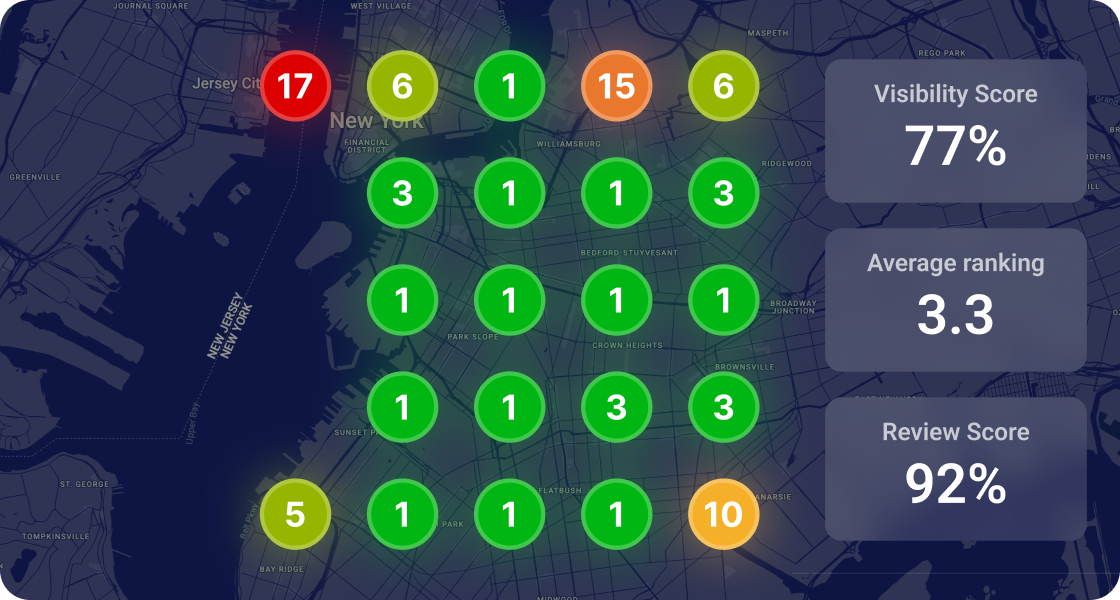

Ever wondered what type of local business content is most influential? Need to improve conversions, sales, customer retention, and referrals? Want to surpass your top competitors in Google’s local pack and Maps results? Know you’ve got to earn inclusion in conversational AI programs and search-based AI Overviews in order to be present everywhere consumers look for local business information?
The solution to this big marketing riddle is: reputation management. More specifically:
Whitespark’s Ultimate Guide to Local Business Reputation Management will walk you through all seven of these essential practices, provide sharable stats to prove value to decision-makers at your brand or your agency’s clients, and give you helpful templates for acquiring and responding to reviews across a variety of common situations. Use our expert tips to build a better business on the basis of your own customers’ reviews.
Before we dive into improving your reputation management strategy, bring these stats to your next all-hands or client meeting to help decision-makers quickly understand the phenomenal power of reviews on real-world business outcomes.
1. 99+% of consumers read local business reviews
No other form of online local business content enjoys this level of readership and influence.
2. 72% of consumers write local business reviews as a reward for great customer service
The best way to inspire this highly-influential, volunteer sales and marketing force is to treat customers well.
3. 92% of consumers now feel that business responses to reviews are part of customer service
Today, consumer evaluation of brands include both offline and online experiences, and your customer service is incomplete without review responsiveness.
4. 73% of negative reviewers will give brands a second chance if an owner response addresses and resolves their complaint
Customer churn creates unnecessary business costs that can be significantly reduced by keeping existing patrons happy instead of having to replace them with new ones.
5. 54% of negative reviewers will update their star ratings and text to reflect that a subsequent experience with a brand solved their problem
Every negative review you receive erodes your average star rating on platforms like Google Business Profile – complaint resolution via owner responses defends your rating.
6. 2 of the top 10 local ranking factors relate to reviews
Local search marketing experts believe that high numerical Google star ratings and overall review count are among the top ten greatest influences on local pack rankings. Other review-related factors in the top 20 include sustained influx of reviews over time and review recency.
7. 67% of consumers are most influenced by most recent reviews
To become a competitive local brand that is chosen by the maximum number of customers, your company needs a steady stream of fresh incoming review content, because this is what searchers consult first in evaluating local business reputation. There is also evidence that review recency is becoming an increasingly important local search ranking factor.
8. Google’s AI Overviews are currently appearing for 68% of local business-type search queries
The most popular AI summaries and chat programs are all scraping and surfacing review content – brand discoverability in these environments depends, in part, on being reviewed.
9. Review fraud is creating $300 billion in annual consumer harm in just three local business sectors
A study of the medical, home services, and legal fields found that 14% of Google-based reviews were suspicious and that review fraud is causing serious real-world harms to consumers. Review spam fighting protects the communities you serve and increases customers’ chances of connecting with a legitimate business like yours.
10. AI-generated reviews could surpass human-written ones in the near future
Based on month-over-month growth of reviews that have been generated by AI instead of written by legitimate customers, some analysts are predicting that this form of review fraud could soon outpace authentic review content. The quest for trustworthiness will require reputation management strategies that go beyond basic review acquisition.
Statistic Sources:
• GatherUp: Beyond the Stars: How American Consumers Use Reviews to Choose Local Businesses
• Whitespark: Local pack/finder ranking factors
• The Transparency Company: The High Cost of Review Fraud
• Whitespark: New Research: The Prevalence of AI Overviews in Local Search
• Whitespark: The Most Underrated Local Ranking Factor in 2025
While a first step to marketing local businesses is to get their basic information published properly across major online indexes so that they can be discovered by consumers, these stats make it clear how central reputation management is to being chosen.
You’re ready to zoom in now the specific skills you need to turn your reputation into your brand’s most powerful driver of profit.
When done right, review management can help your brand reach its dream goals of profitability. When done wrong, it can destroy your reputation, put you out of business, and result in litigation. This is serious.
How can you protect your company from these disastrous outcomes? It’s fairly simple, involving two steps:
Some of the majors include:
Yelp is an outlier, in that it doesn’t want business owners to solicit any of the reviews that appear on its site. Most other review platforms are fine with you engaging in review acquisition activities, so long as you comply with all of the following:
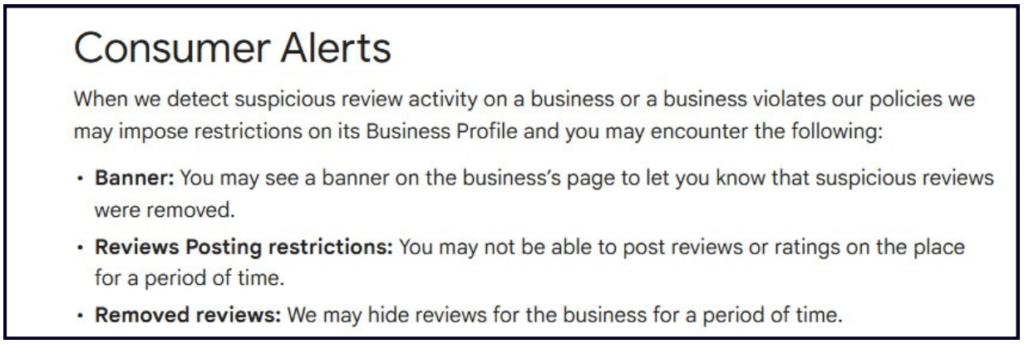
Read the individual guidelines to be on firm ground. Failure to comply can result in:
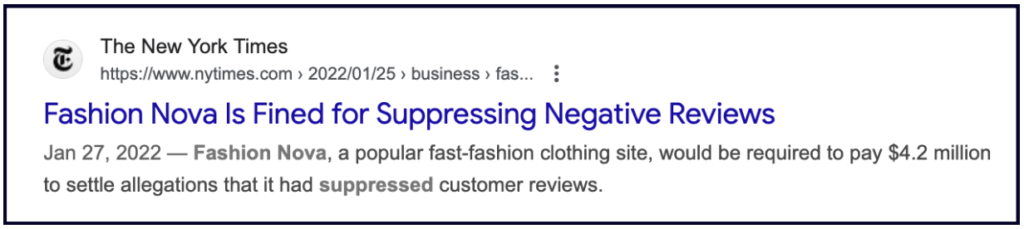
Most countries have their own legal codes prohibiting fraudulent business practices. For example, the US Federal Trade Commission issued a final ruling in 2024 prohibiting:
Failure to comply with these rulings means the FTC can seek civil penalties of up to $51,744 per violation. In other words, review fraud could lead to bankruptcy and business closure, making it something to be avoided at all costs.
Because review platforms can be exploited and consumers can be duped, global review fraud networks have sprung up to take advantage of these weaknesses for profit. Individual business owners may feel tempted to “get ahead” quickly by violating guidelines and legal codes, but given the penalties, it’s never worth it.
Even if you feel frustrated by competitors who are clearly engaging in review spam and haven’t yet been caught, the smartest thing you can do for your brand is to protect its long-term reputation by building one based on reality instead of fraud.
The good news is, most local businesses can earn an excellent reputation via two simple practices. Keep reading!
Here’s the secret, 2-ingredient recipe for building a persuasive, lucrative local business reputation over time:
As you saw in the statistics section of this guide, the main reason reviewers write reviews is as a reward for excellent customer service. The first step to earning this content is to create customer service experiences that meet and exceed patrons’ expectations. This means devoting serious resources to this checklist:
☐ Staff hiring practices that identify candidates who either have or can be trained in the necessary people skills to represent your brand well to the public
☐ Staff training practices that emphasize face-to-face complaint resolution and escalation, and that turn team members into product and service experts
☐ Company culture development that authorizes staff to go the extra mile to create memorable consumer experiences that deserve to be reviewed
☐ Offline business operations that minimize friction; for example, adequate store and phone staffing so that every customer is quickly greeted and expertly assisted
☐ Online business operations that minimize friction; for example, publishing a customer-centric website that functions properly and managing local business listings so that customers encounter accurate information about locations, contact methodologies, and hours of operation
☐ Responding quickly to all reviews with thanks for positive sentiment and an offer to make things right for dissatisfied customers
☐ Consistent review sentiment analysis that catches emergent problems at business locations for resolution so that they are experienced by as few customers as possible
☐ Competitive review analysis that identifies how nearby peers are either succeeding or failing at delighting their customers; this will show you gaps in the market you can fill and also give you new insight into the kinds or experiences that inspire high star ratings
Once you’ve checked off the above boxes in your quest to offer the best customer service in town, you’ll be in the ideal position to ask for reviews. Here’s your checklist for earning the highest ROI from your review acquisition campaigns:
☐ Ask customers for reviews in person at the time of service
☐ Collect the email addresses and SMS contact information from customers at the time of service
☐ Keep review requests brief but helpful; use a Google Review link generator to make it easy for customers to get to your profiles and offer a variety of review platforms so that that each reviewer can choose their favorite
☐ Increase the relevance of reviews by asking customers to evaluate particular aspects of the business such as products, services, features, amenities, etc.; this will increase the chances of your reviews being brought up in SERP features like Google local justifications and in conversational AI
☐ Urge customers to include photos and videos in their reviews by making your premises and projects photo-worthy; experiment with sending product and project photos to customers who may not have them for use in reviews
☐ Conduct testing to identify ideal review request timing, as it will differ for each business; experiment with different timing over the course of several months to discover which pace of requests yields the highest rate of response
☐ Send review request reminders, as the #1 reason consumers don’t write more reviews is because they simply forget to
☐ Expand requests beyond third-party reviews to ask for first-party reviews and testimonials from your customers for publication across your digital and physical assets
☐ Conduct competitive research by doing business with your top-reviewed local peers, if possible, to gain insight into their review acquisition process
Sign up below to get our free, customizable email and SMS-based review request templates to earn both third-party and first-party customer feedback in these 5 common scenarios:
Don’t limit your brand to only requesting reviews via email and text. Expand your outreach via these methodologies:
Multiple surveys indicate that most customers expect a review request either in person at the time of service, on the same day, or within 3 days of their experience with the business. While these general rules of thumb are a useful starting point for starting your review requests, your own customers’ preferences could differ widely.
For example, it’s a natural fit for a coffee shop to ask for a review at the time of service, on receipt, or via a same-day email/SMS request. For a hotel, however, a guest might need time to settle in back at home before they’re ready to think back on a vacation they’ve taken and leave a review.
The best way to find out the ideal timing for business is run a month-over-month test like this:
Month 1: Make no requests
Month 2: Only ask in person
Month 3: Only send same-day requests
Month 4: Only send requests 3 days after service
Month 5: Only send requests 1 week after service
Month 6: Only send requests 2 weeks after service
If you’ve invested in professional review management software like Whitespark’s Reputation Builder, totaling up your reviews over specific timeframes will be simple. If you’ve not yet invested in tools, you can go to the Google Business Profile for each of your locations, click on its “reviews” section, and filter via the “newest” button to see your reviews in order:
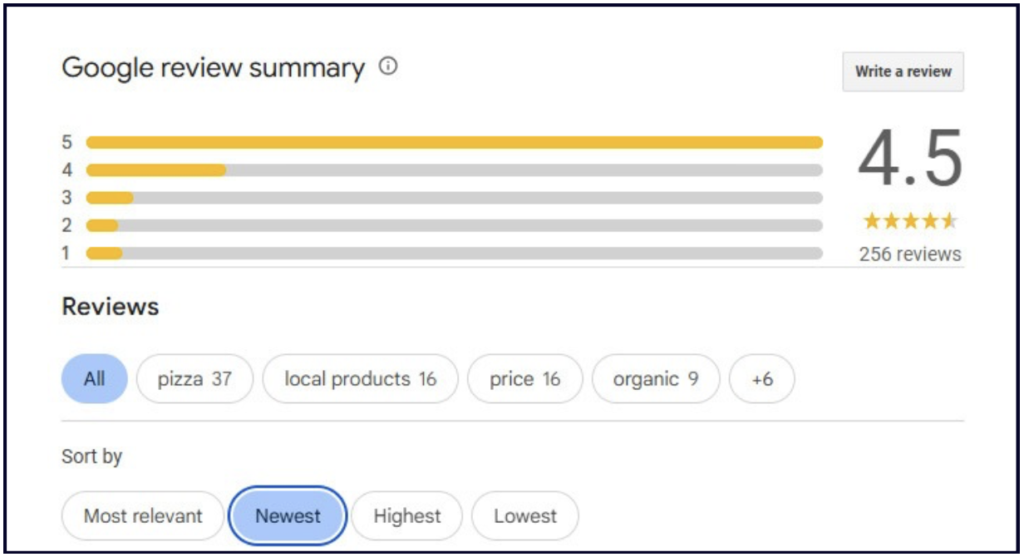
This test will help you see which review request timing strategy works best for your patrons and yields the highest volume of reviews.
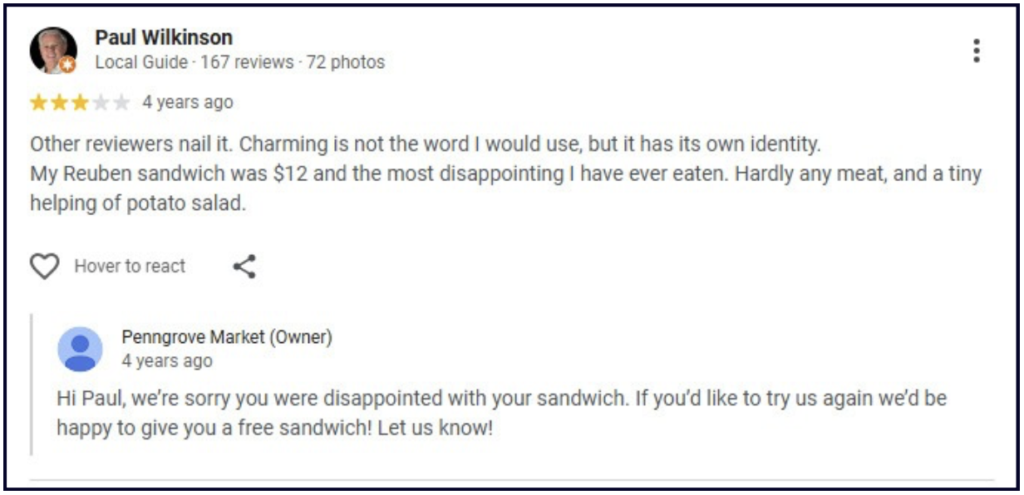
Most major review platforms enable you to respond to your reviews, and as we saw in the statistics section of this guide, the public considers review responsiveness to be a necessary component for providing good customer service.
Knowing these three facts will put you in the right mindset for making review responses a powerful part of your local business marketing strategy:
Fact #1: Most customers don’t require a perfect 5-star average rating to do business with you. Don’t worry too much about receiving a few less-than-perfect ratings and reviews over time.
Fact #2: If you can make things right for a negative reviewer, they are highly likely to keep doing business with you and may update their rating and review to reflect an improved opinion of your brand. Responsiveness defends your average star rating and reduces costly customer churn.
Fact #3: Potential customers are more likely to choose brands that respond to reviews. Your reviews aren’t just a two-way conversation between you and a single customer – they are marketing content that proves to the public how you treat patrons when things go right and wrong. Set the goal of making an amazing impression of your customer service via impressive responses.
Let’s start with some quick definitions:
5 Stars = a positive review that deserves your thanks and your invitation to come again; if a dissatisfaction is expressed, address it
4 Stars = a mostly positive review that deserves your thanks and your invitation to come again; if a dissatisfaction is expressed, address it
3 Stars = a neutral review, likely made up of some praise but also some complaints that need to be addressed
1-2 Stars = a negative review, hopefully specifying complaints you can resolve
If you haven’t yet, sign up below to get the following free, customizable review response templates:
While you should always try to respond quickly to any type of review, your business may need to prioritize responding to negative reviews first if a busy schedule is limiting your daily time for responsiveness. Studies indicate that:
Responding to negative reviews should be seen as a top marketing priority, with adequate hours benchmarked for it, ideally on a daily basis.
While AI is being marketed as a great time-saver in all kinds of scenarios, we recommend a thoughtful approach to this dynamic. You need to know that 64% of consumers are discouraged from writing reviews if they suspect a local business is using AI to respond. Given the value of review content in your business marketing plan, you may not want to risk alienating your best free sales force with shortcuts.
Another aspect of this to consider is that automating customer communications puts distance between consumers and brands. It’s online marketing 101 to strive to develop authentic, trusting relationships with real people in your community whom your business needs to serve to become a success. Evaluate how customers may feel when presented with the difference of being served by caring people at your company vs. being “handled” by tech like AI. What kind of business do you want to build?
One use case for AI could be if you are struggling to come up with additional templates for review requests or responses. Conversational AI like ChatGPT can quickly suggest alternate wording at scale to help you avoid accidentally looking too generic across multiple requests and responses. However, proceed with caution. AI is infamous for generating nonsense. Be sure you have human oversight in place to fact-check and vet any AI-generated messaging before you send it off to a real customer.
Bearing in mind that your responses aren’t for just one reviewer to read but for all the public to encounter as an indicator of how your business treats customers, steer clear of these mistakes:
1. Don’t be rude to the reviewer, even if their review is rude – Some reviewers will use harsh words and overblown language in their negative reviews, but you are the professional in the scenario. Don’t be tempted to descend to their level of communication. Set your brand apart by using calm and empathetic language, even though it can be tempting to clap back when a review sounds absurd.
2. Don’t argue with the reviewer – Other potential patrons are unlikely to be impressed by the sight of you squabbling with a customer over the details of the negative experience. Unless a review is fraudulent (which we’ll cover in our spam fighting section), simply apologize and encourage the customer to follow up with you offline for resolution. Dirty laundry isn’t a pretty sight for any brand, so try to keep it to a minimum by focusing on solutions instead of arguing over details.
3. Don’t forget to apologize – Don’t shift blame onto the customers or onto your staff. Be big enough to say “I’m sorry for your poor experience.” Even if you believe a customer is being over-the-top or impossible to please, an apology shows other patrons will see that your brand takes responsibility for its own customers’ experiences.
4. Don’t write a novel in your responses – Keep it brief and actionable. Apologize and offer to make things right. Where a specific issue caused a problem on the day the customer transacted with you (like a drink machine being out of order or a power outage interfering with order fulfillment) you can certainly mention this and that the issue has been resolved, but avoid looking defensive with an overly-long reply. There is also no evidence that keywords in owner responses impact local rankings in any way, so there’s no call to try to optimize these fields as part of your SEO strategy.
5. Don’t respond initially to review spam – If you believe a review violates Google’s guidelines and is fraudulent, hold off on responding to it. We’ll show you how to flag it for removal and follow-up steps you can take if Google won’t take the suspicious content down. Responding to review spam should be the last step you take, after all other options have failed. If none of your efforts lead to removal, you can respond to the review with a message like, “After extensive internal research, we’ve had to conclude that this review does not represent a real customer experience with us. We have taken the necessary steps to report it to Google for investigation.”
Once you’ve got your strategy up and running for requesting and responding to reviews, you’re ready to maximize the benefits of your online reputation with five advanced activities.
Your review corpus provides the best, free, real-time intelligence you can access anywhere about business performance. Some reputation management software will have special tools for segmenting review content by topic and timeframe so that you can identify both positive and negative emergent trends.
For example, a multi-location pizza chain might discover an unusual uptick in mentions of “cold pizza” at one of its branches. This signals that an investigation is necessary to root out causes of food arriving cold so that operations can quickly be improved before further customers experience the same problem and write more negative reviews.
Sentiment analysis can also capture positive trends. For example, if a mom-and-pop diner debuts a new menu item and asks its customers to evaluate it, reviews can tell the story of whether the new offering is an instant hit or may need some work to become a popular dish. Reviews provide insight into what you’re getting right, so you know which policies, practices, goods, and services to continue with.
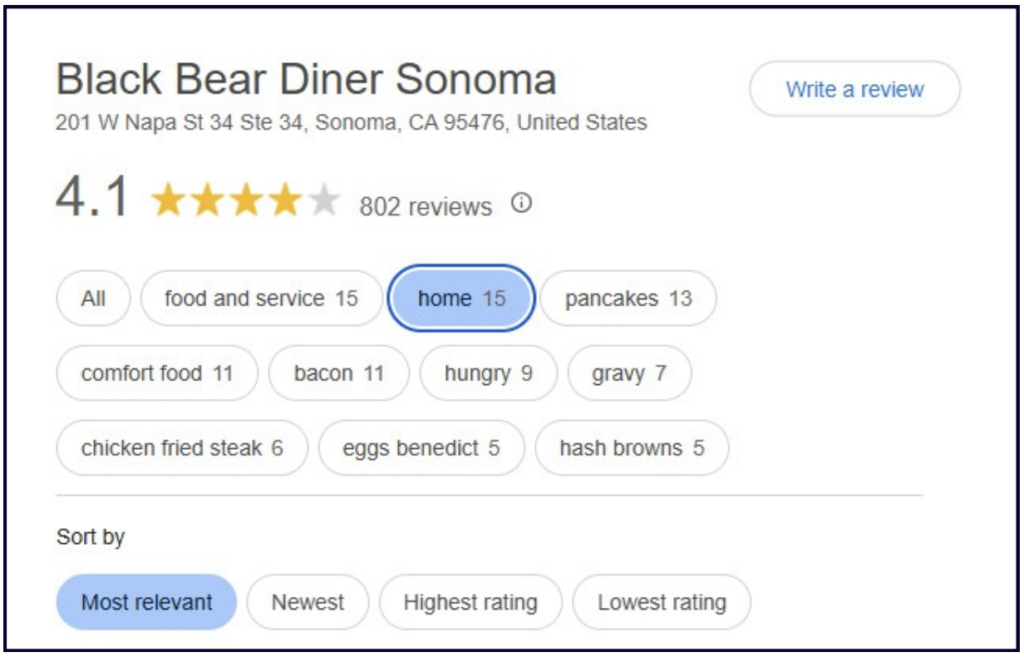
If you’ve yet to invest in paid sentiment analysis tools, you can do a basic form of this research right on your Google Business Profile. Go to your reviews section and check out the rows of tabs known as Place Topics (shown above). These represent the words your reviewers are mentioning most frequently. Each tab is like a little mystery. You don’t know, at first, whether people are mentioning these topics in a positive or negative light. Sometimes, you may not even be able to guess why a particular phrase is being frequently cited by patrons. For example, why are so many customers mentioning the word “home” for this diner? Click through on the tabs to find out:
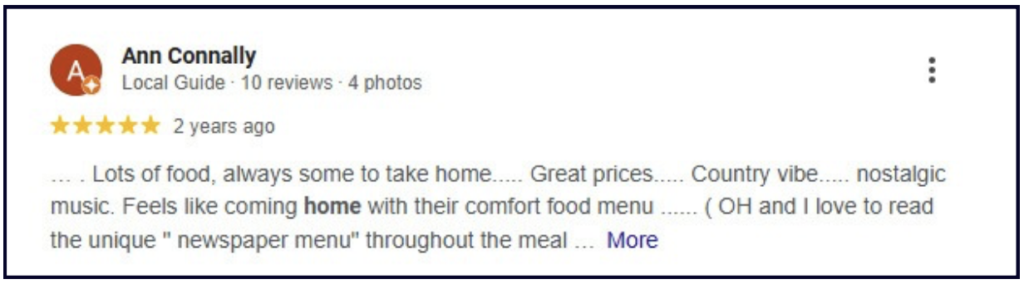
While some of the reviews are evaluating the diner’s “home fries”, it turns out that the majority of these mentions of “home” stem from reviewers mentioning feeling at home in the restaurant. This would be a great attribute for this business to be using across all its marketing copy, since it’s clearly popular with customers.
You can also use the “newest”, “highest rating”, and “lowest rating” filters right below your place topics to gain insight into:
The goal of sentiment analysis is to build a better business on the basis of customer feedback. One of the greatest powers of reviews is that the community you want to serve tells you exactly how to please it.
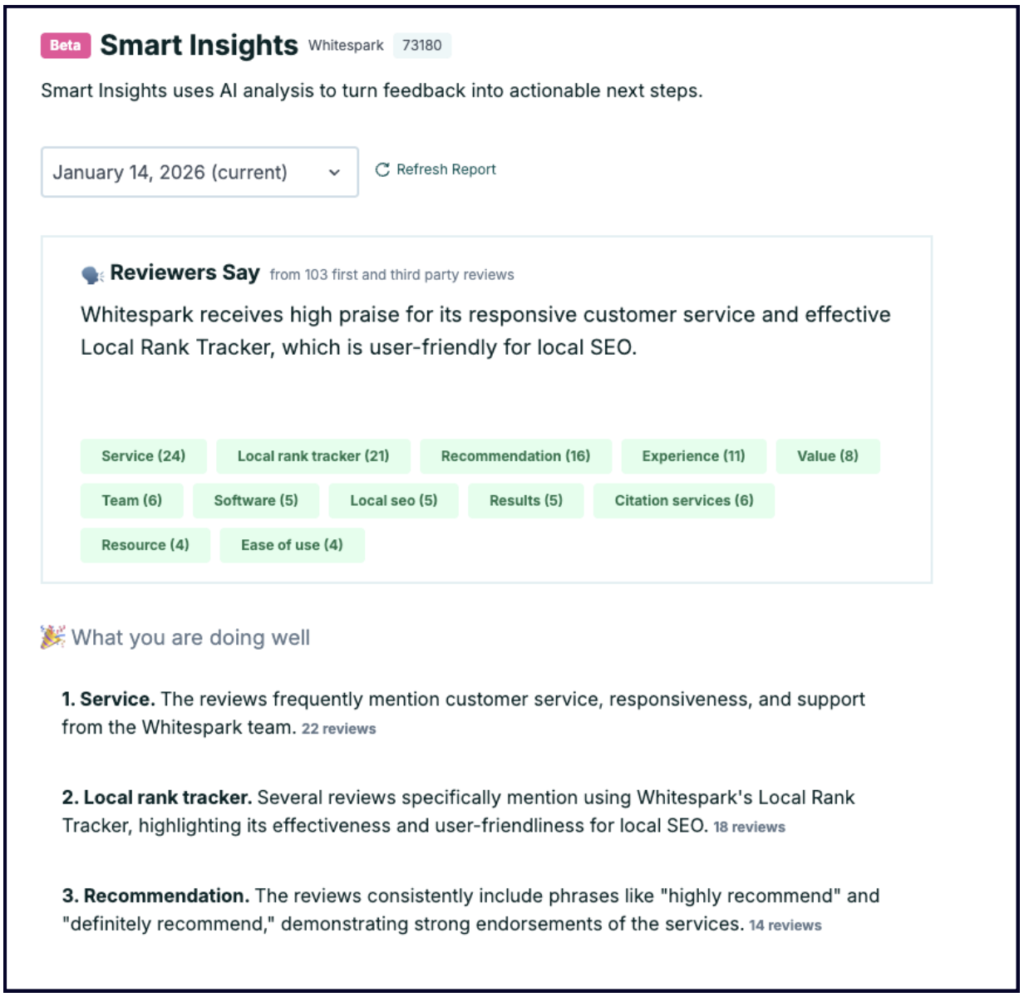
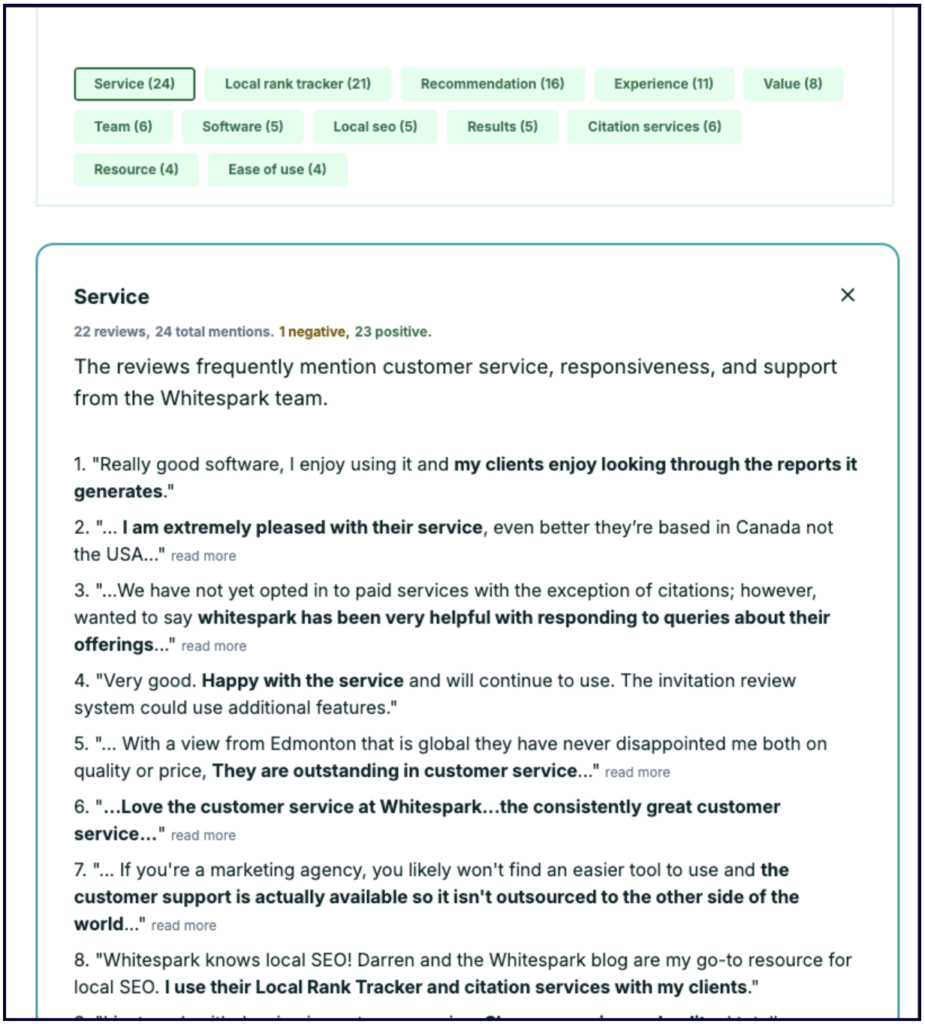
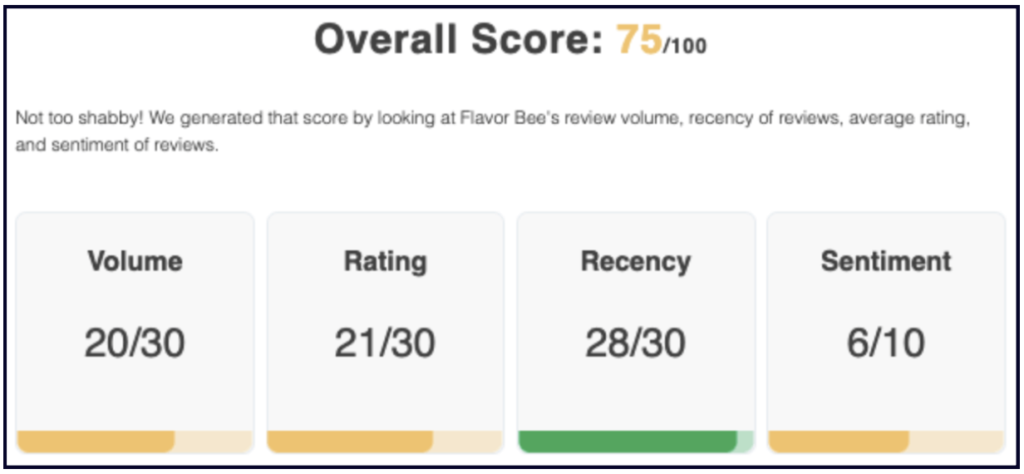
Because reviews are a matter of public record, you have an excellent opportunity to evaluate your nearby competitors’ customer service hits and misses. This will help you identify gaps in the local market that you can fill while also inspiring you to experiment with new offerings that are evidently popular with your competitors’ customers. You can begin your competitive analysis right now by filling out this free form from Whitespark to receive a reputation scorecard that will compare your review volume, rating, recency, and sentiment to your top competitors.
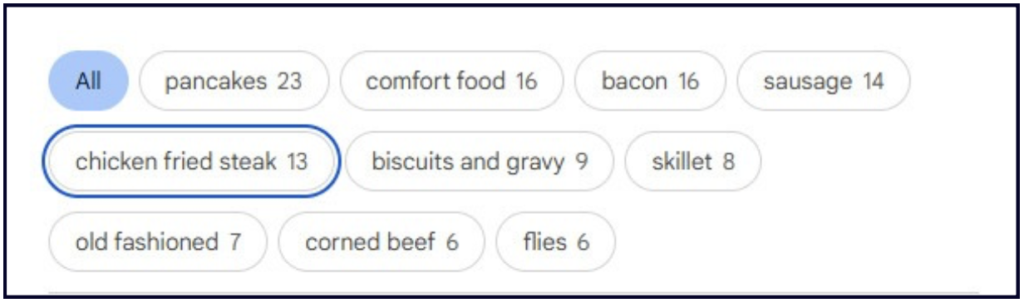
Another speedy way to gain insight into a competitor’s performance is to look at their place topics. You can click on each tab to see whether local people are praising or complaining about topics like this diner’s “biscuits and gravy”, and a significant insight certainly awaits us under the place topic “flies”. When we dig down, we see that multiple reviews are complaining about insects:

A competitive win can be had here if the diner you’re marketing engages in better janitorial practices so that its profile does not contain complaints about a lack of sanitation.
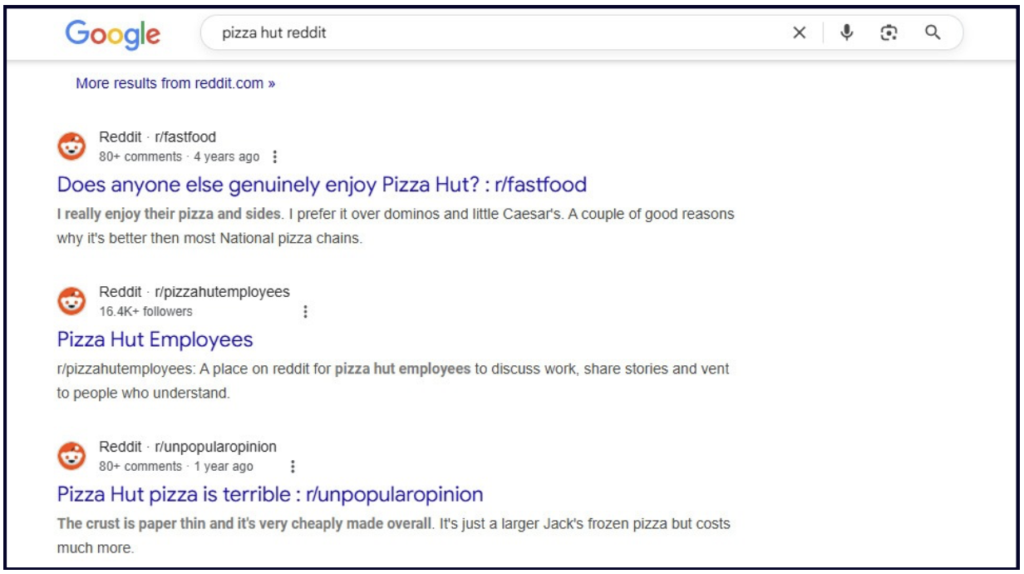
Customer sentiment isn’t confined to reviews. Research what the public is saying about your competitors on platforms like Reddit, Instagram, and Facebook. While social media can be an exaggerated version of real-world reality, you can find out a lot about what customers and communities like and dislike by practicing good social listening. All these insights can inform the development of your brand as the best choice in town.
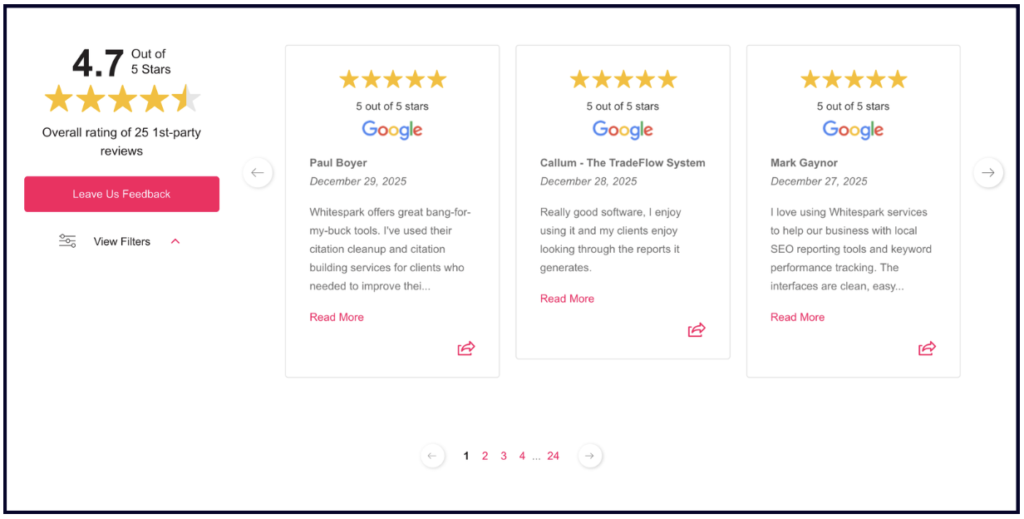
There’s so much more you can do with the reviews you’ve earned than leaving them gathering dust in your Google Business Profiles. At the very least, you should be embedding them on your website (like the example shown above using Whitespark’s Reputation Builder software).
In addition to embedding reviews on your site, you can re-use them as:
Remember: consumers trust what customers say about brands over what brands say about themselves. Commit to finding new ways to center your patrons’ own words in all your marketing campaigns.
The truth is that most local business platforms contain some degree of review spam and some business categories are particularly polluted. Review fraud creates two significant harms:
1. It swindles the public, influencing consumers to accidentally transact with bad actors whose reputation is based on deception instead of authentic local customer sentiment. Fraudulent reviews can result in real-world harms to consumers’ finances, safety, and health.
2. It exploits local business platform guidelines so that shady businesses outrank trustworthy ones. In its most extreme form, review fraud can also be used by extortionists who post negative reviews of local businesses and then demand money for removal of this content.
Dedicating time to review spam fighting has the tandem goals of protecting your community from scammers and leveling the online playing field so that your legitimate business has a better chance of being visible to local consumers.
As we covered earlier in our What not to do in local business reputation management section of this guide, review fraud is not only forbidden by most local business platforms, but is also illegal in many countries. While entities like Google routinely remove suspicious reviews, their efforts simply don’t match the scope of the problem. Because of this, your business needs to take an active role in defending its reputation by reporting reviews that seem fake.
If you’re confident that a review violates Google’s Prohibited & restricted content guidelines, Google offers these steps and this excellent video narrated by local SEO, Joy Hawkins, walking you through the process:
Use this handy checklist to successfully report fake reviews you have received on your Google Business Profiles for requested removal:
☐ Don’t respond to fake reviews. Screenshot them for your records.
☐ Log into the Google account associated with the affected profile, find the spam review, click the three dots next to it, and then the “report reviews” popup.
☐ From the next popup, choose the reason you are reporting the review, like “fake or deceptive” content, then click the “submit” button.
☐ After three days, check the status of your report via Google’s review management tool. Search for your business by name in the tool, and Google will let you know if their decision is still pending, if they have removed the review, or if they have decided not to remove the review.
☐ If Google has decided not to remove the review, click the “appeal eligible reviews” radio button in the Review Management Tool to make a one-time appeal. This is your chance to share any documentation you have about which of Google’s policies you believe the review violates. You’ll receive a case ID via email after submitting your one-time appeal. You’ll typically receive a final decision within a couple of weeks.
☐ If Google’s final decision is not to remove the review, take your case ID number to the Google Business Profile Community Help Forum and ask a volunteer Product Expert if they would be willing to take a second look at your case. If the PE agrees with you that Google has made a mistake, they have the power to escalate your case for reconsideration.
If you’ve checked off all of the above boxes, but this process has not resulted in Google removing the offending content, you have three main options left to you:
1. Interest the press in your story.
While few reporters will be interested in a single spam review you’ve received, media channels do take notice of large-scale review spam attacks. Negative publicity could cause Google to act when other options fail. Google also has the unique power of being able to temporarily pause the review functionality on individual Google Business Profiles during major review spam attacks.
2. Seek legal counsel.
If your nation’s laws forbid review fraud, an attorney can advise you as to whether you have a legal case to make. They may be able to send a cease and desist letter to a review fraudster, add you to a class action lawsuit, or pursue an individual suit.
3. Accept the situation and move on.
If you’ve run out of other options, use the owner response function to briefly note that internal investigation has suggested that the review does not stem from a real customer, and that you have reported it to Google for removal. Then, move on to earn fresh positive and authentic content. Remember that consumers are most interested in your most recent reviews. By earning new reviews from happy customers, you will limit the visibility of review spam when potential patrons sort via the “newest” filter.
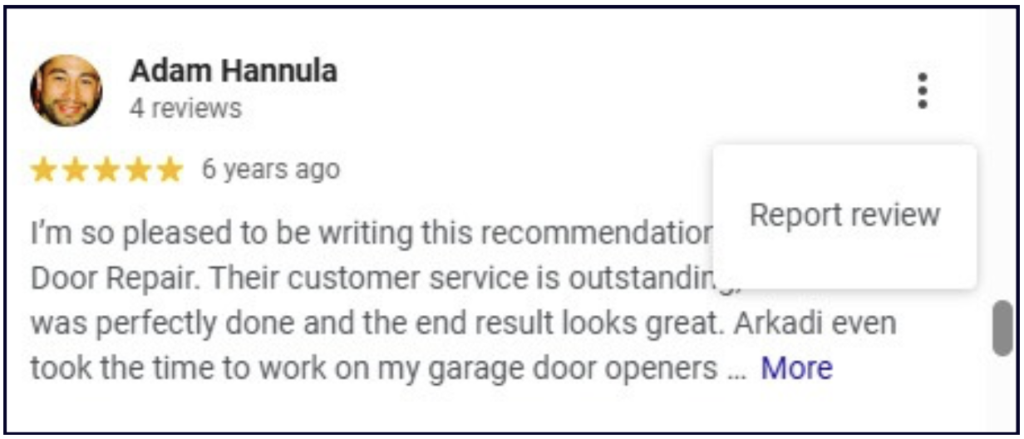
Any member of the public can click on the three buttons to the right of any review to access this Google interface for reporting a review for removal:
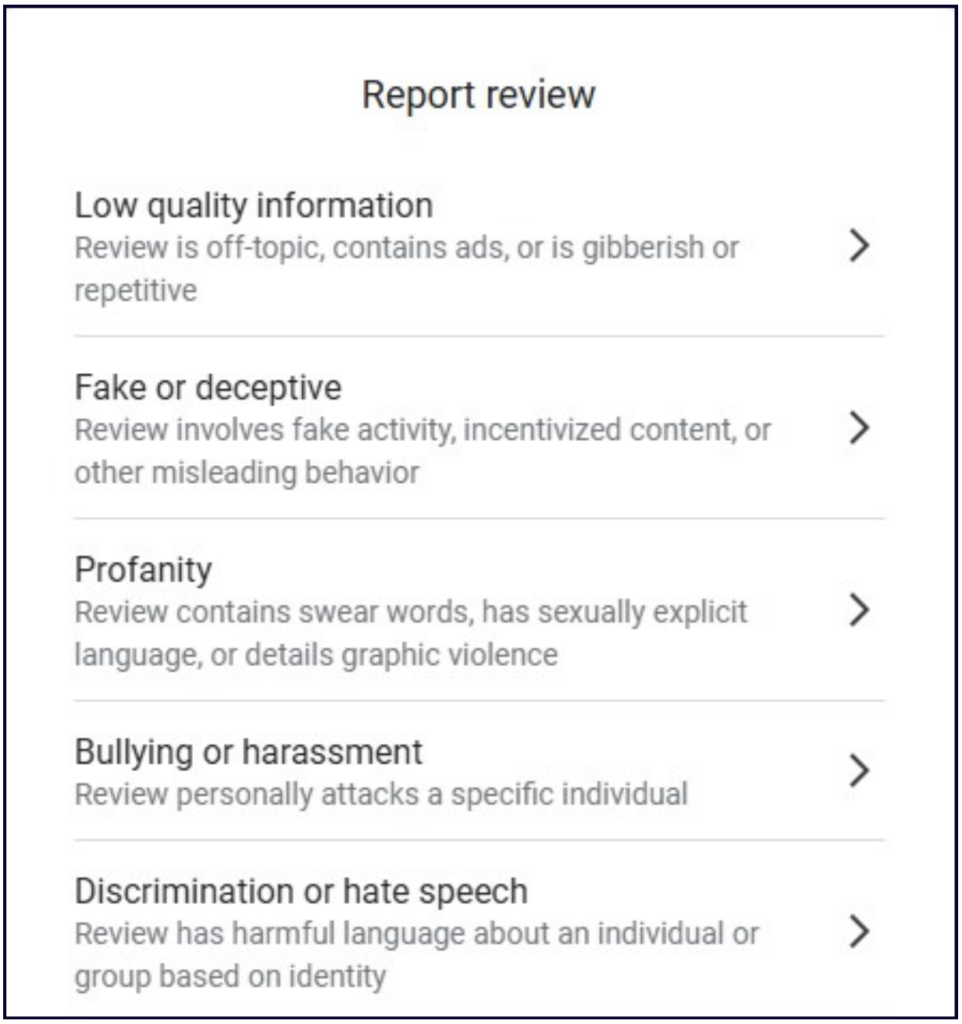
While there is no guarantee that Google will act on your report, here are 7 signs of potential review spam to be on the lookout for when evaluating your competitors’ reviews:
It’s important to approach review spam fighting of this kind with modest expectations. Even if you get Google to remove some of your competitors’ fraudulent content, they may continue to rank well and publish new review spam. It can be frustrating, but is still often worth the effort when you think of what’s at stake for your community and your business.
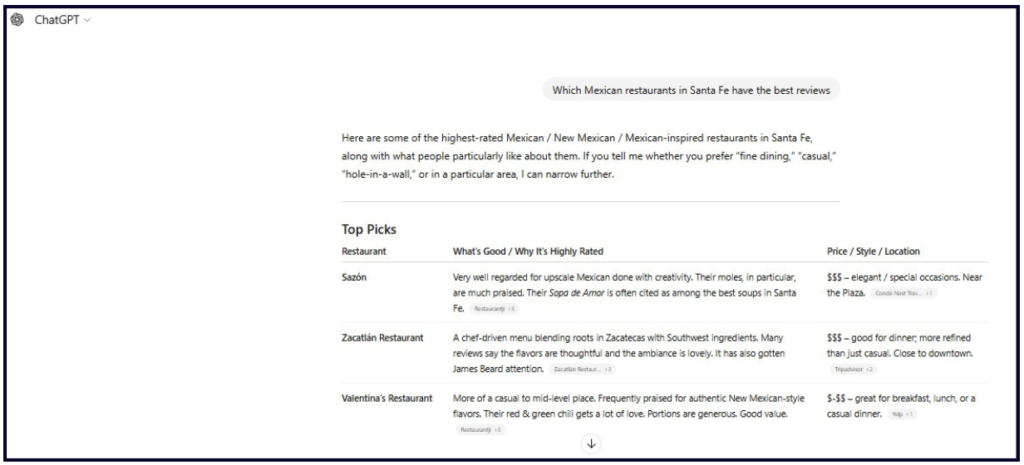
While AI stakeholders are promoting environments like ChatGPT, Google AI Overviews, and Google AI Mode as great new opportunities for consumers to connect with local brands, they also represent a new level of reputation risk for businesses.
Generative AI is prone to error. It can tell consumers literally anything about your business, pulled from anywhere in its training sources. AI is not obliged to correctly represent your company’s reputation. It is also underregulated. If an AI chatbot misinforms a consumer about the safety features or proper use of your company’s products, resulting in harm, liability is unclear.
Despite the risks of AI, the reality is that large tech corporations are investing heavily in it in hopes that it will be widely adopted by the public. An appropriate response at this stage of development is to investigate the reputation-related training sources that are being used by major AI platforms so that you can seek inclusion in them. For example, the above screenshot from ChatGPT is using TripAdvisor reviews in response to a prompt about the best Mexican restaurants in Santa Fe. Early research also indicates that traditional tactics like publishing press releases may influence which brands show up for AI prompts like “best”. We also recommend reading about the role of structured citations in developing an AI-scrapable online footprint.
While pursuing AI inclusion is currently necessary to achieve maximum visibility, its downsides add to the pressures of an online local business environment that is already hampered with review fraud. Unfortunately, a scenario is being created in which fraudulent reputation content will be scraped by AI, adding a further layer of misdirection for consumers. If this is the future AI brands are creating, your local business needs an actionable response.

There is no gainsaying that every local business needs a powerful online presence to be visible during the discovery phase of consumer journeys. Community members who have never heard of your brand, don’t know what their local options are for fulfillment, are new in town, or are passing through need to be able to find you via Google’s local packs, conversational AI, social media, and other popular channels.
But once you have won a customer’s first transaction, this dynamic should change. The ball is now in your court, free of third-parties, like search engines and chat bots. Your goals with every transaction should be to:
In addition to this, building a customer-centric culture that facilitates really getting to know the people you serve may be your best reputation bulwark. Earning the friendship and trust of local people turns your business into a resource they personally count on, can forgive for small mistakes, and want to tell others about.
One further step you should strongly consider is identifying relevant pears on the local commercial scene whose businesses relate to (but don’t directly compete with) yours. An event center that hosts weddings can build a local referral network with caterers, florists, wedding planners, DJs, houses of worship, officiants, bakeries, and other resources that are united by serving the same customers. Agree to cross-promote one another, both online and offline, cutting through clutter so that real-world people are directly receiving trusted, expert local recommendations.
If you’re feeling a little overwhelmed by all the components of a full reputation management strategy, it can help to remember that this is a marathon instead of a sprint. Your long-term goal is to meet and surpass the reputation signals of your top competitors over time. You need to run your own tests, do your own experiments with outreach to see what your own customer base responds to, cover your bases across multiple platforms, and be continuously looking for new ways to build a better business on the basis of what local people tell you they want.
Review management tools can bring welcome organization to many aspects of this form of marketing. The insights you’ll gain over time can powerfully contribute to your brand’s good name, profitability, and longevity.
Miriam Ellis is a local SEO columnist and consultant. She has been cited as one of the top five most prolific women writers in the SEO industry. Miriam is also an award-winning fine artist and her work can be seen at MiriamEllis.com.

Whitespark provides powerful software and expert services to help businesses and agencies drive more leads through local search.
Founded in 2005 in Edmonton, Alberta, Canada, we initially offered web design and SEO services to local businesses. While we still work closely with many clients locally, we have successfully grown over the past 20 years to support over 100,000 enterprises, agencies, and small businesses globally with our cutting-edge software and services.