CONTENTS

🤓 The 2026 Local Search Ranking Factors are here!! Check out the report!


Social media can sometimes feel like an awkward fit for local businesses, while at the same time holding out the promise of increased sales if you manage to hit a sweet spot with your marketing.
Awkward, both because some industries aren’t particularly suited to inspiring lots of social sharing and because being too sales-focused isn’t welcome on most social platforms.
Promising, because if you do manage to land on the right approach, your social efforts can help you build local brand recognition, referrals, and sales.
Many local business social media guides neglect to mention the plain truth that some social channels simply aren’t right for some brands, but nearly all companies should start by:
This guide will explain why social media needs to be part of a complete local search marketing strategy based on current usage data, what your platform options are and how to get set up on them, and how real-world local brands are making smart use of these diverse marketing channels. We’ll also save you time and money with a list of local social media pro tips and pitfalls.
When social media first emerged on the scene, much of the marketing advice surrounding it was about trying to go viral (getting thousands of likes and shares on social postings). While enjoying this kind of national/international press can still help with general brand recognition, a more repeatable goal in the local business context is to build reliable visibility within the local community you serve. Instead of focusing on quick bursts of virality, practical social media goals for your business can include:
The last two points on this list can take time, but can be more easily facilitated with tools.
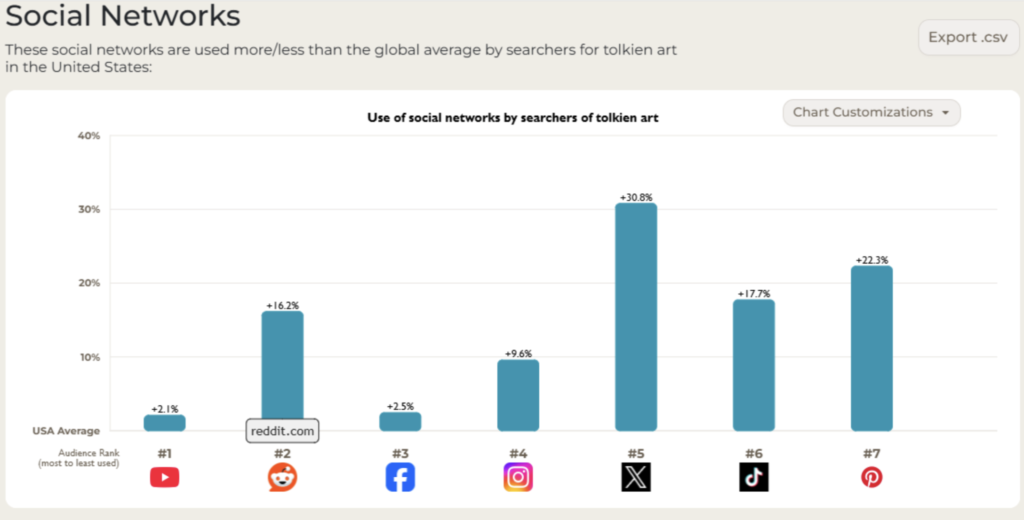
The audience research tool, SparkToro (shown above), can give you a general breakdown of the social platforms on which particular topics are most discussed. For example, if you were operating a local art gallery and wanted to know which social networks are used most frequently by people searching for a particular style of art (like art inspired by the writings of J.R.R. Tolkien), SparkToro tells you that X, Pinterest, TikTok, and Reddit look like strong bets. You can make use of a free trial of the tool to start your exploration of platforms that might be a good fit for your brand.
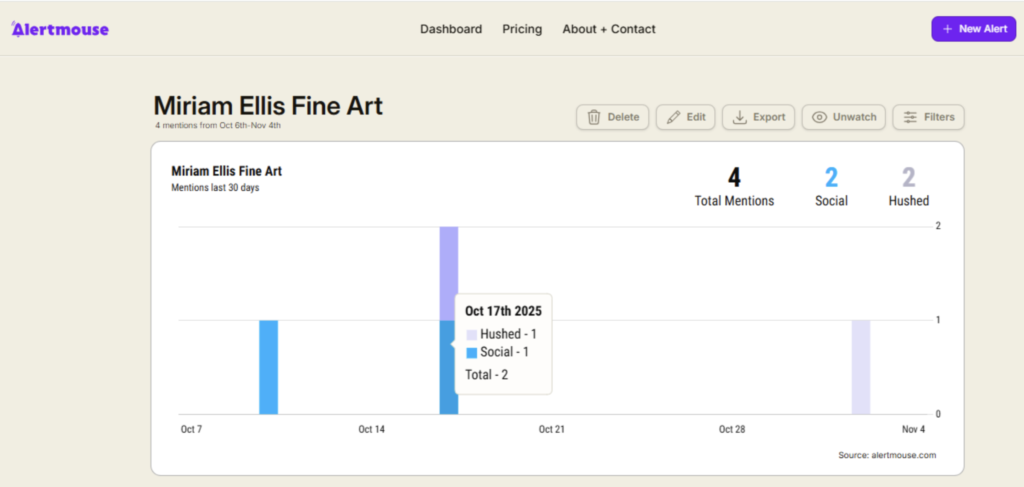
Google Alerts is a free tool that can help you monitor the web for brand mentions, but it’s not widely considered to be a very usable product. If your brand is ready to get serious about social media listening to improve your responsiveness to the community, investing in a professional tool like Alertmouse could be a smart move, as it will keep you continuously updated on mentions of your brand.
💡 As you get started with social media marketing for your local business, don’t burden yourself with huge goals like going viral. Instead, focus on being discoverable, accessible, and helpful to your local audience on their preferred platforms.
Most small-to-medium local businesses run on limited marketing budgets. This necessitates developing a cool head amid digital marketing industry hype so that you aren’t wasting precious resources on short-lived fads every time the “next big thing” bubbles up.
If you’re feeling anxious about you or your team’s ability to be continuously active across multiple social media channels every day, we have some data from our friends at GatherUp that can help put social media marketing in a more manageable context for your brand. In the most recent edition of their annual local consumer behavior survey, GatherUp asked 1000+ US consumers how they begin the journey of discovering local businesses:
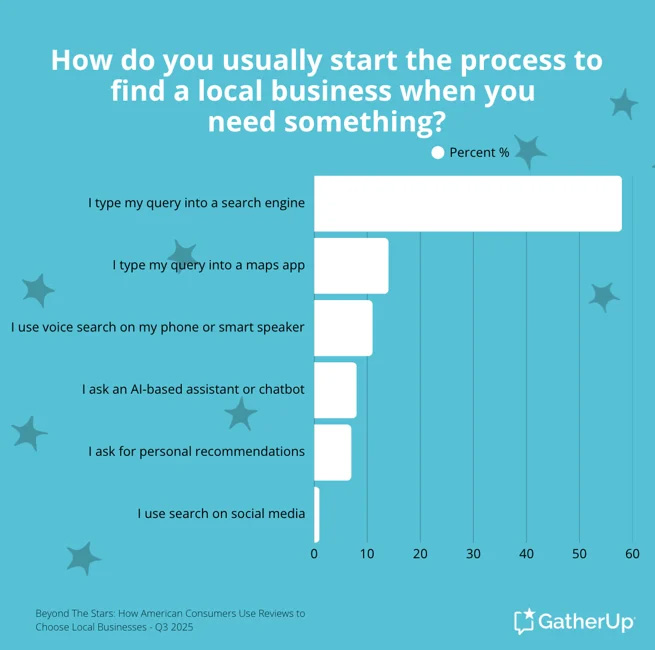
It can feel like a welcome “settle down” moment to understand that just 1% of consumers start the local business discovery process on social media channels. Instead, they’re predominantly relying on traditional search on platforms like Google at the outset of their journey.
However, social media’s power begins to materialize when the question relates to the variety of places in which consumers are looking for local business recommendations, apart from on traditional review platforms:
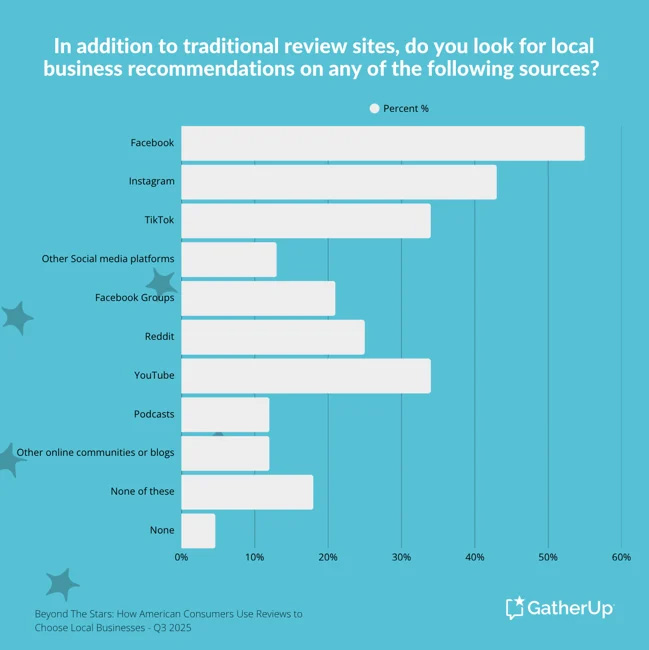
Both the diversity of this list of social media options and the numbers of consumers consulting them to find recommended nearby businesses deserve your company’s attention. 55% of consumers are using Facebook for this type of research and an additional 20% count on the Facebook Groups they’ve joined. 43% are using Instagram. Both TikTok and YouTube come in at about 34%. Reddit has recently been trending up and down, and its 25% is not negligible. Podcasts, blogs, and other online communities are also in the mix.
✍️ Being recommended by social media users tends to come down to two factors:
1. Being trusted and liked by the community you serve
2. Being easy to share about on social platforms (e.g. if you have a presence on a particular platform, it’s quite simple for the public to “@” you on it while recommending your brand)
Another helpful context for understanding the role of social media is to see how local SEO experts are weighting it as a ranking factor when it comes to Google’s local packs, Google’s organic results, and AI search. Check out this summary from Whitespark’s 2026 Local Search Ranking Factors Report:
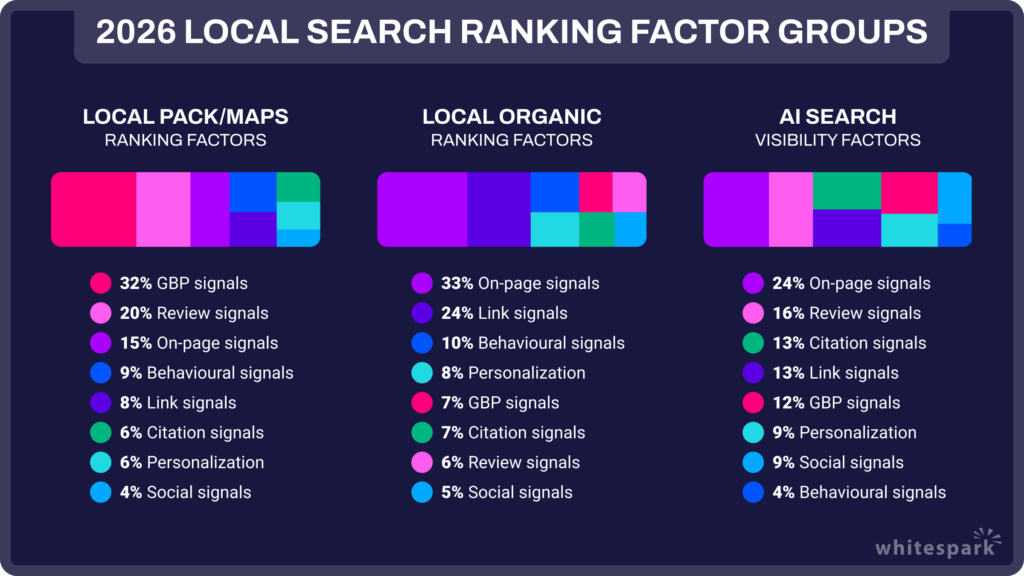
As we can see, social signals appear near the bottom of all three lists when it comes to influencing visibility in each environment.
That being said, the role social media will come to play for your unique local business may differ widely from industry norms. For some brands, it’s central to everything they do. For others, it plays a more modest role in their overall marketing strategy. Your opportunity lies in experimenting with where social media can take your particular company in terms of growth. Now it’s time to consider your options!
Here, we’ll go through a rundown of the majors, with links to technical specs + real-world examples of local brands utilizing each platform.
YouTube is owned by Google and has become one of the most-used platforms on the web. As a local business owner, you can create a YouTube channel to post a variety of videos, including long-form content and shorts.
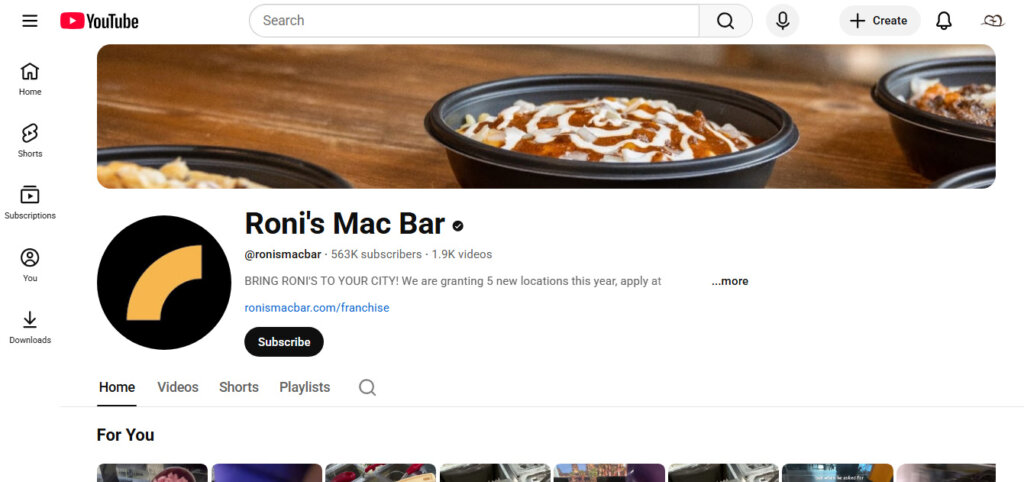
When asked what has set their business apart from other restaurants, the Roni’s Mac Bar franchise’s Chief Administrative Officer, Mary Senese says, “Roni’s had a lot of online success early on that really showed us the power of social media. We kind of accidentally went viral in the very beginning, and we took that and learned how to make a formula out of successful content.” Their YouTube channel has over 500k subscribers, demonstrating the central role this platform has played in their marketing, primary via video shorts, like this one in which the brand has gotten 5k views of a video raising the topic with customers of which menu items can be eaten in a car on the way home from the restaurant:
Read YouTube’s community guidelines to understand the types of content that are allowable on their platform. Use YouTube’s video and audio formatting specifications to ensure your video footage will render properly on their platform.
Facebook is owned by Meta and is a platform for sharing text, image, and video-based content. Use Facebook’s guide to create a page for your local business to which you can upload posts, reels, and photos.
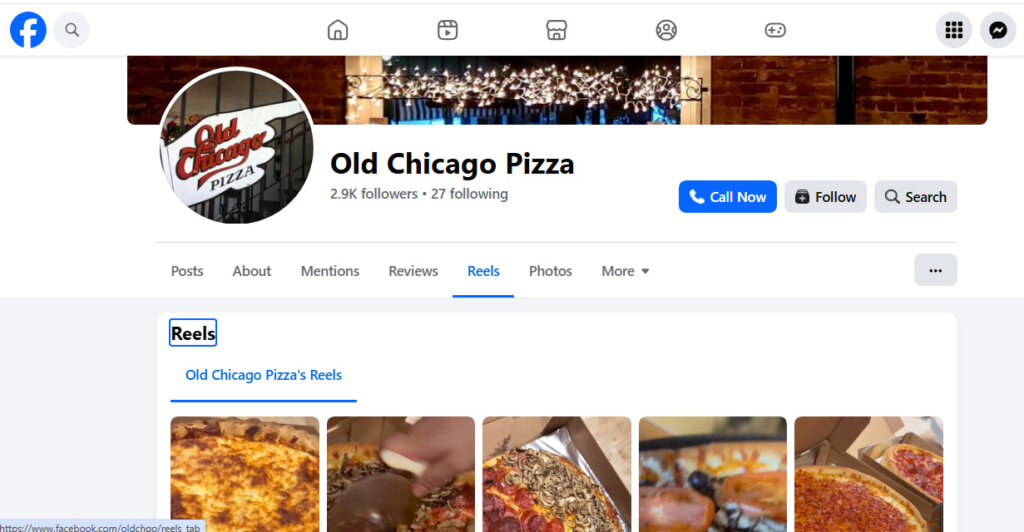
Check out the Facebook page of this family-owned pizza place with two locations in a small city that’s earned nearly 3k followers. In particular, their videos (called Reels) are earning hundreds of thousands of views. Despite the brevity of this clip, the public is clearly inspired to see pizza being dished up for a customer:
Here are the Meta Community Standards which govern Facebook. Canva has a good rundown of technical specs for Facebook images and posts.
Instagram is also owned by Meta and is heavily focused on image and video-based content. You can create a professional account on Instagram to represent your business
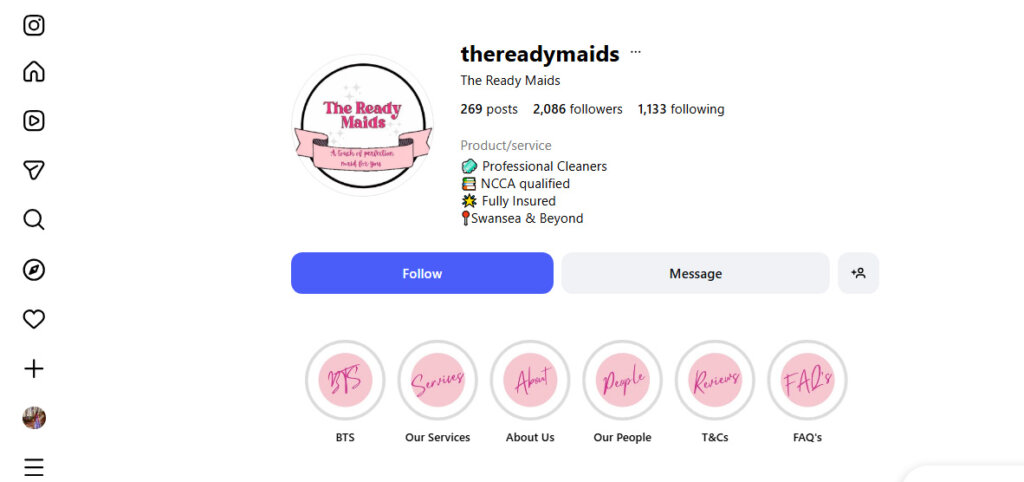
Here’s a small house cleaning service that has earned over 2K Instagram followers since creating its account in 2021. Simple, cheerful reels like this one show that the business is staffed by real people who take pride in their work:
Meta’s Community Guidelines govern Instagram. Meta offers this guide to getting your business up and running on Instagram and here are their technical specs for photos and videos.
TikTok’s Chinese parent company is ByteDance, and it is primarily focused on the sharing of video content. To create a TikTok business account, you’ll need to download the TikTok app on your phone, open your profile, and tap on the hamburger menu to navigate to “settings and privacy”, and then “manage account”, and then “switch to a business account”.
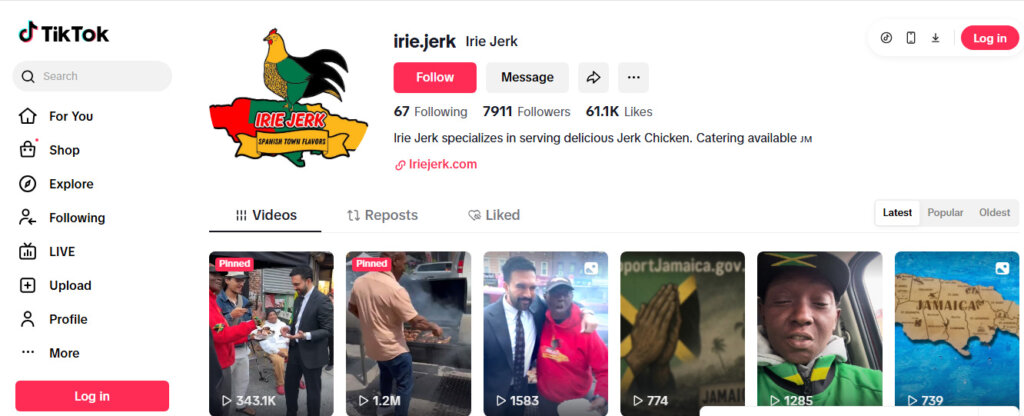
This Caribbean eatery and catering business in Brooklyn, NY has seen major success on TikTok, earning 7k+ followers. Virality has caused celebrity visits that have resulted in videos earning over 1 million views. Here’s an example of the city’s mayor stopping by for some food and chat, demonstrating how this business is a valued part of the local community:
Here are TikTok’s community guidelines, and here are their technical best practices. Descript has a good piece on evaluating TikTok video formats and sizes.
Reddit is a forum-style social media platform that is a publicly-traded entity with major shareholders including Advance Publications, Tencent, and Sam Altman. Visit the Reddit registration page to create your account, using your company’s name. You can use Reddit to share text, image, and video-based content, but it’s important to adhere carefully to guidelines published by the groups within Reddit that are called “subreddits” to avoid having your business criticized and banned. While sites like Instagram and TikTok are primarily focused on sharing image and video content, Reddit is a platform the public turns to for advice, recommendations and information.
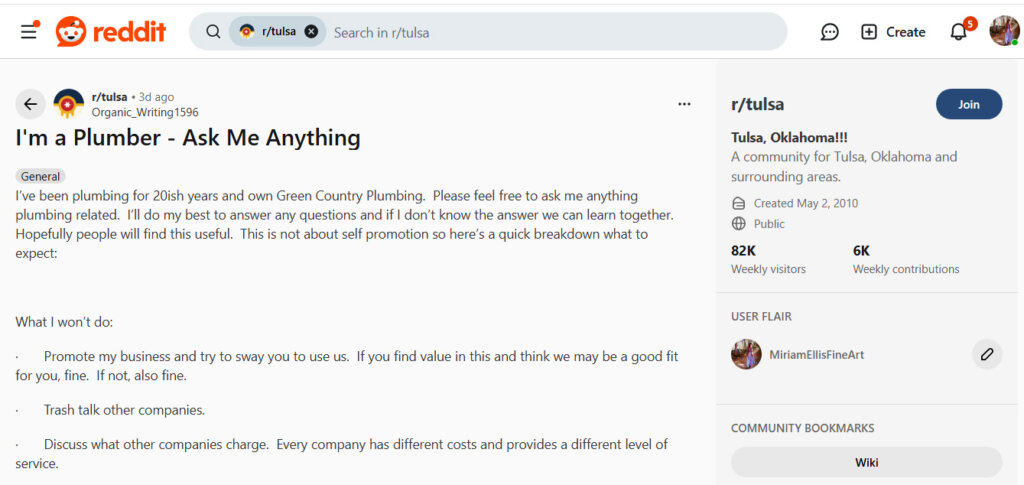
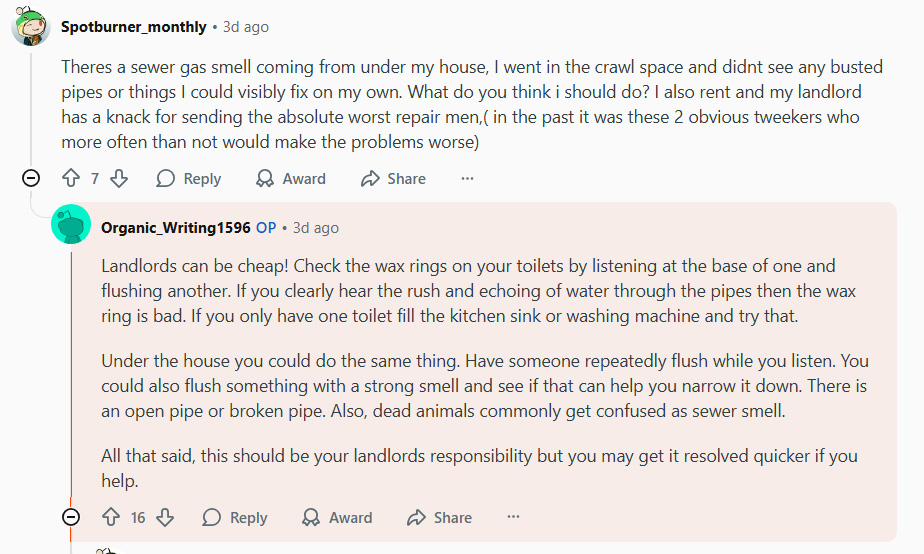
The above screenshot captures a Tulsa, Oklahoma plumber who has started an “ask me anything” (AMA) post in the r/tulsa subreddit. Instead of trying to use this platform to hard-sell services to their community, they are offering to answer questions for free, which has earned them 180 replies and 90+ up votes. Look at this example of how the plumber is answering someone’s question without directly pitching to be hired for a project:
You can find a subreddit for most towns and cities and for all kinds of topics. Subreddits can also be created by and for brands to give customers a place to talk about them, like this example of a large gym and fitness franchise.
Definitely read the community guidelines known as the Reddit Rules, but, as specified above, read the guidelines of any subreddit before you post to it to avoid damaging your reputation in a local community. Some subreddits forbid all forms of self-promotion. RatioSize has a good guide to all of the image formats you may wish to use at different times in contributing to Reddit.
In most business categories, your Google Business Profiles contain a built-in feature called Google Posts that lets you publish updates, offers, and events directly to your listing. Posts can include images, video, and text content. A unique and powerful aspect of GBP posts is that they can be seen by any searcher, instead of only by people who already follow your other social media channels. Watch Darren Shaw’s great explanation here:
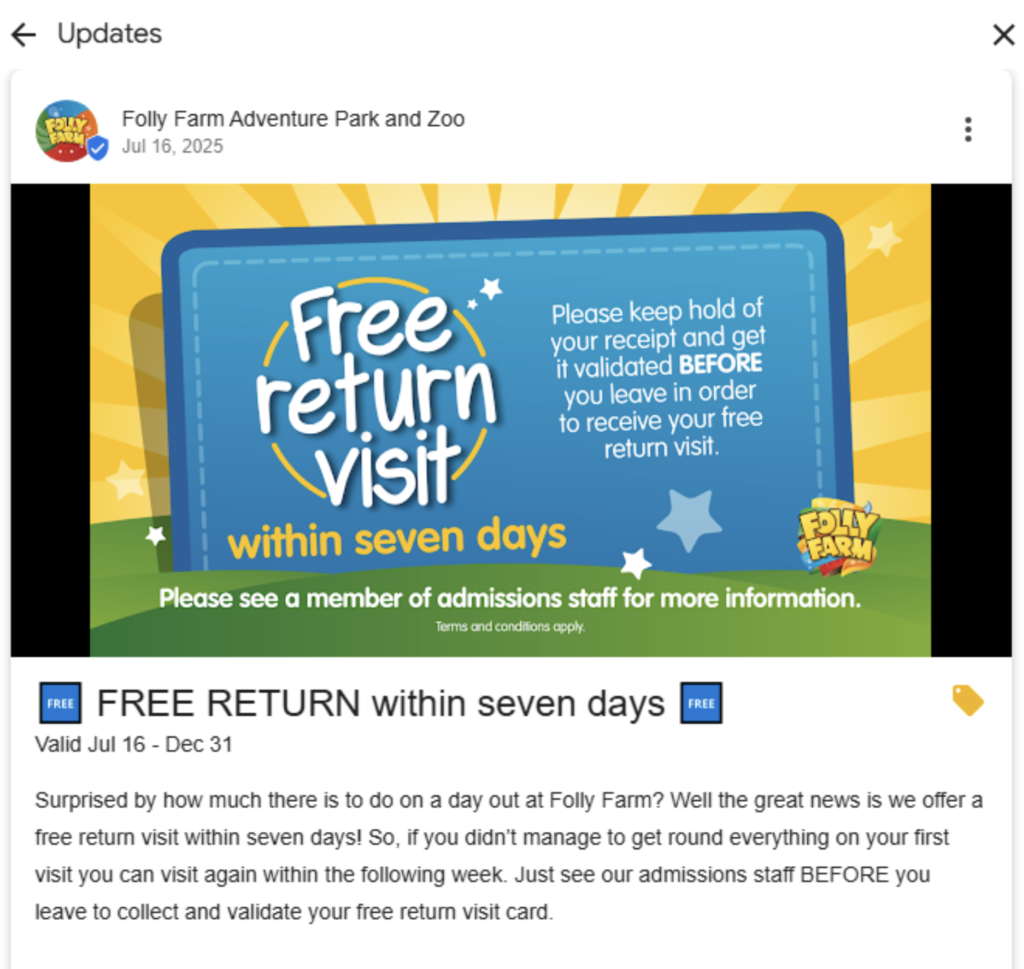
The best use of Google posts is typically to help searchers decide to choose your business over a competitor when they are on the verge of a transaction. Posts can give an added reason to select your company. In the above example, a local attraction is using a Google post to offer a free return visit deal to customers. Imagine how this might appeal to tourists who might want to visit a large theme park or other public venue more than once during their vacation.
We’ve already given you the link to the main Google doc governing GBP posts, but we also highly recommend that you read our guide to How to do Google Posts the Right Way.
LinkedIn is owned by Microsoft, and is primarily a platform for professional networking. Most local businesses should create a LinkedIn page, and B2B local brands may find LinkedIn especially helpful for making professional connections with potential clients and partners. A quality that sets Linkedin apart from many other social media platforms is that people expect to see business and sales content there.
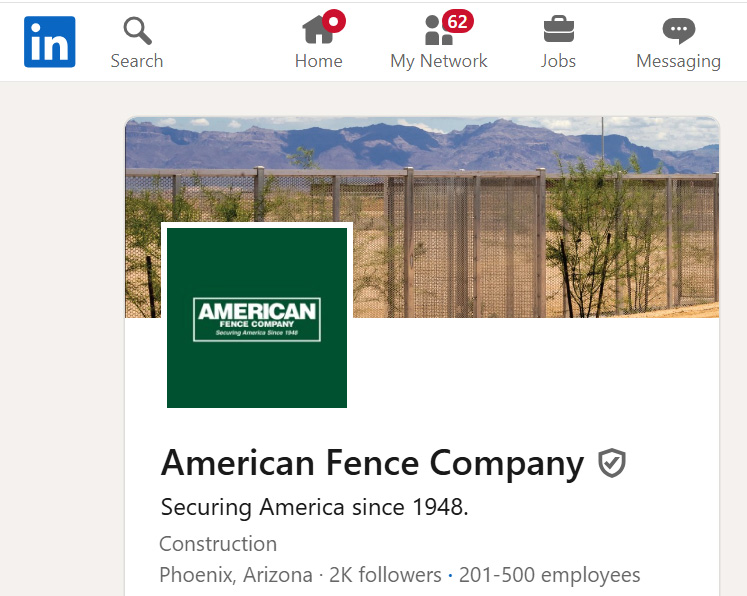
American Fence Company is a mid-sized construction chain with locations in 9 US states. They’ve earned a modest 2k followers on LinkedIn, with posts like this one showcasing their work:
Here is Linkedin’s community policy. You’ll find their image and video formatting specs here.
We’ve covered many of the most popular social media platforms, but there are certainly more options. Consider these possibilities:
Thanks to social media’s popularity in daily business life, you don’t have to reinvent the wheel to get started. Make use of the following advice to avoid preventable problems and increase your chances of success.
Neglected social media profiles can send a signal that your business is not engaged, or even no longer operational. If your core contact information changes and you don’t update your profiles wherever they exist, it can misdirect and frustrate customers. If consumers are reaching out via your profiles and you’re not responding, you’ll create a negative brand impression.
Create a posting and maintenance schedule that accurately reflects the time you can devote to each particular channel, and do your best to stick to it.
It’s perfectly okay if you post more on some channels than others once experimentation has helped you find your best fits over time, but never walk away from a social profile you’ve created without posting an announcement that customers should find you on a different channel going forward.
An example of this relates to a controversial social media platform like Twitter/X. Due to a change of ownership, many business owners no longer felt comfortable posting on this once-dominant site. If you permanently leave a platform, post a message directing searchers to your preferred channels for up-to-date information.
Your brand voice is the way your company communicates with the public. Typically, a legal firm is going to have a different style of communicating via social media than a cupcake bakery.
If you are running a very small business and all communications are coming directly from the owner, then brand voice consistency is generally easily achievable. If, however, company employees are given the keys to your social media, then each team member should be carefully trained in the style and content that is appropriate to the business. Failure to train staff can lead to firings and public controversy.
Some brands intentionally invite public comment by using social media to be provocative. A famous example of this from recent years involved a meat products brand challenging a scientist’s definition of science.
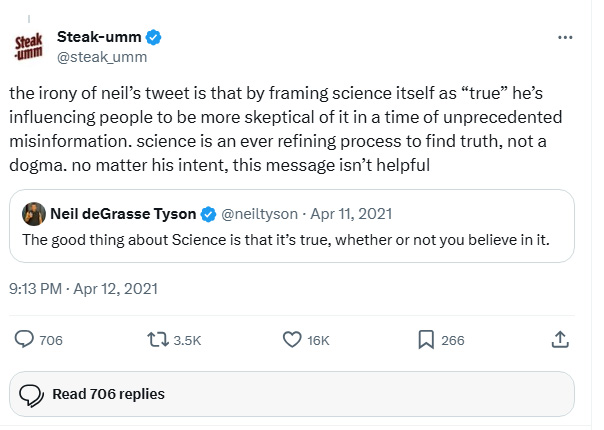
While deliberate controversy can shine a spotlight on your brand, be sure you can walk your talk if you use social media to take stands on particular issues. A recent SproutSocial survey found that 87% of consumers want social influencers to address current affairs, but that 42% will unfollow brands that don’t align with their views. In other words, you are taking a risk if you use social media to speak up about controversial topics. Only do so if you are prepared to win and lose potential customers based on your public stance.
A positive outlook is nearly always beneficial to brands, but it’s vital to enter the social arena with a realistic understanding of:
It’s smart work to investigate where your local and industry competitors are enjoying the most response to their social postings, but be wary of generalizations about which platforms are the right fit for your business.
For example, you might hear that Facebook or Instagram are only for “old people” and decide you don’t need to explore these channels because your company primarily serves a younger audience. You might decide you will make TikTok your core social platform. This could be a good decision, or, it could accidentally exclude you from reaching valuable prospects. Imagine a scenario in which your young customers are evaluating your brand and products/services via TikTok, but their parents and grandparents are looking for gift ideas for young customers on Facebook. Wouldn’t you want to cover all bases, time permitting?
It’s also wise to consider that if a certain platform is stereotyped as the wrong fit for a particular industry, this could lower the competitive level of the channel, making it easier for you to stand out if you are one of the few brands present there. YouTube might not seem like a perfect match for the garage door industry, but check out Joy Hawkins’ interview of a business owner who built a multi-million-dollar home services empire via this channel. Takeaway: don’t rely on industry norms or other people’s opinions about social media opportunities. Do your own research and make your own experiments.
While it’s understandable that brands feel safest when there’s an obvious throughline between marketing investments and returns, it’s vital to know that social media attribution is notoriously difficult.
Why is it so challenging? Imagine a customer who is planning a wedding. They’re looking for the perfect venue in a variety of ways, which could include:
If you are operating a wedding event venue, your social media posting could be influencing many of the touchpoints on the above list. For example, the customer’s aunt may have heard about you via Instagram. A Reddit thread mentioning your brand may have come up in Google’s organic results. Your Google Business Profile posts may be part of the mix, as can your other third-party social media posts. Your B2B relationships with local business peers can even come into play; imagine the local florist (with whom you have a referral program) running a billboard featuring their flower arrangements at your venue and receiving queries about where the photo was taken. Clear attribution in so many instances can be next-to-impossible.
This can cause brands of all sizes to hesitate about investing in social media, and we recommend watching this video short from Rand Fishkin addressing this issue, in which he states:
“You need to be willing to invest in hard-to-measure sources that you cannot absolutely 100% prove, because otherwise you will not be taking enough risk, and you will not be putting enough budget and effort into marketing, and you will lose out to a competitor who does.”
While over-investing in social media is a real risk, under-investing can make you invisible in competitive markets.
Chain and franchise models have to make a decision about whether to go with a single set of social media profiles representing the brand entity, or to localize social outreach via the empowerment of branch managers to develop their own social presences. While there may be some instances in which it’s preferable to go with the former approach, the latter arrangement can substantially improve the visibility, accessibility, and responsiveness of branches at a local level.
Chain managers and franchisees have a unique degree of insight into local culture and affairs that can be brought to bear in social media marketing. This is difficult to replicate at a corporate level. Just be sure that any branch representing the brand has been thoroughly trained in brand voice and standards before you give them the keys.
Social media content can inform, entertain, engage, inspire, and amuse audiences. Be willing to experiment with a mix of content and track public response to build up knowledge about the content varieties your local community appreciates most.
An important part of this exploratory process surrounds discovering the best proportion of sales-focused content vs. other content. There is a well-known 80/20 rule which suggests that a healthy balance is 20% sales content to 80% other content, but we recommend that you do your own experiments with this. And, as always, adhere strictly to individual social community policies regarding self-promotion.
All popular social media platforms are incredibly crowded. Unless you are one of those outlier brands that immediately goes viral in launching their social presence, you will typically need to work hard and long to build up a decent following on any channel.
It can genuinely be discouraging to work hard on developing high-quality social media content. Your team might invest days or weeks in researching a topic for an infographic or video, post it, and then get little or no public response. This is extremely common for brands that have yet to earn many followers and even established brands publish plenty of social “duds”.
Something that can help you build endurance for the social media long game is to remember that your local business has the built-in advantage of needing to captivate a limited audience instead of a national or international one. Your goal is to get as many of your neighbors as possible to follow you, but the ultimate number is typically dictated by the population of your town or city. You probably don’t need hundreds of thousands or millions of followers for your social media to be a strong driver of discovery, communications, and sales.
As you’re working to build up your own following, you can get a major boost to discovery and earn a smattering of new followers by being mentioned by established influencers in your geography or industry. For example, if a popular hobbyist restaurant reviewer in your city mentions the amazing dinner they had at your restaurant, their followers may become yours.
Sometimes, the easiest way to earn influencer mentions involves incentives. You outreach to the influencer, and offer them a free meal, a free product, or a free service, asking them if they would be willing to review it. In all such arrangements, it is vital to disclose that an incentive has been exchanged to avoid violating any truth-in-advertising laws applicable to your country.
Another approach (which involves no incentives) is to appear as a guest on influencer channels. For example, you might appear as a podcast guest, be interviewed on a YouTube channel, or contribute an article to a popular industry blog. This methodology can deliver excellent exposure and earn you new followers and sales.
It’s very easy for brands to fall into the trap of viewing social media as a soap box from which to broadcast brand messaging. While this is certainly an aspect of this dynamic, we recommend that you continuously come back to the reality that much of the public uses social media for communications. People want to engage with content and with other people on topics of interest to them; few are volunteering to be passive recipients of your company’s advertising.
Because of this, an excellent approach to social media is to see it as a tool for:
This is the mindset that can deliver the best outcomes of social media – gradually building open communications with your local community and earning recognition and trust as a local expert on your particular topics. In other words, if your social media strategy is resulting in your neighbors knowing they can come to your brand for help with relevant needs, then you’re getting it right!
As we’ve seen, social media offers wonderfully varied opportunities for local brands to engage with current and potential customers across preferred channels. For most businesses, some form of participation in social media management and marketing is a necessity. But, digital marketing isn’t your only sphere of influence. Take strong next steps by reading Whitespark’s guide on How to Turn Real-World Reputation Into Local Rankings.
Miriam Ellis is a local SEO columnist and consultant. She has been cited as one of the top five most prolific women writers in the SEO industry. Miriam is also an award-winning fine artist and her work can be seen at MiriamEllis.com.

Whitespark provides powerful software and expert services to help businesses and agencies drive more leads through local search.
Founded in 2005 in Edmonton, Alberta, Canada, we initially offered web design and SEO services to local businesses. While we still work closely with many clients locally, we have successfully grown over the past 20 years to support over 100,000 enterprises, agencies, and small businesses globally with our cutting-edge software and services.