CONTENTS

🤓 The 2026 Local Search Ranking Factors are here!! Check out the report!

Article Summary:
• A business address outside Google Maps city borders hurts rankings. Moving or opening a second location is the only true fix, but better reviews and citations can help, too.
• If Google’s borders don’t match real-world addresses, report it publicly. If Google ignores you, strong local SEO signals may still correct how Google understands your business location.
• You often can’t get more reviews than big local brands, but you can beat them on average star rating, recency, and review quality (areas large enterprises tend to neglect).
• Rural businesses with few nearby customers should think beyond Google Maps: product displays in neighboring towns, community involvement, and referral programs can drive more leads.
• Google’s AI tools are starting to reduce the impact of a bad address. Content quality and reputation are becoming more important than location alone.
Is the physical address of your business holding you back from achieving your goals? Are there other aspects of your locality that are making it harder than you’d imagined to earn visibility in Google’s Local Packs and Maps or to attract enough customers?
If so, your scenario isn’t at all unusual, but what can you do about it?
Gail Gardner of GrowMap recently started a Linkedin conversation in which she listed out four very common local business marketing challenges related to physical location and geographic market. This guide will address these barriers to rankings and profits and lay out your strategic options for taking next steps once you’ve realized you’re experiencing any of the following problems.
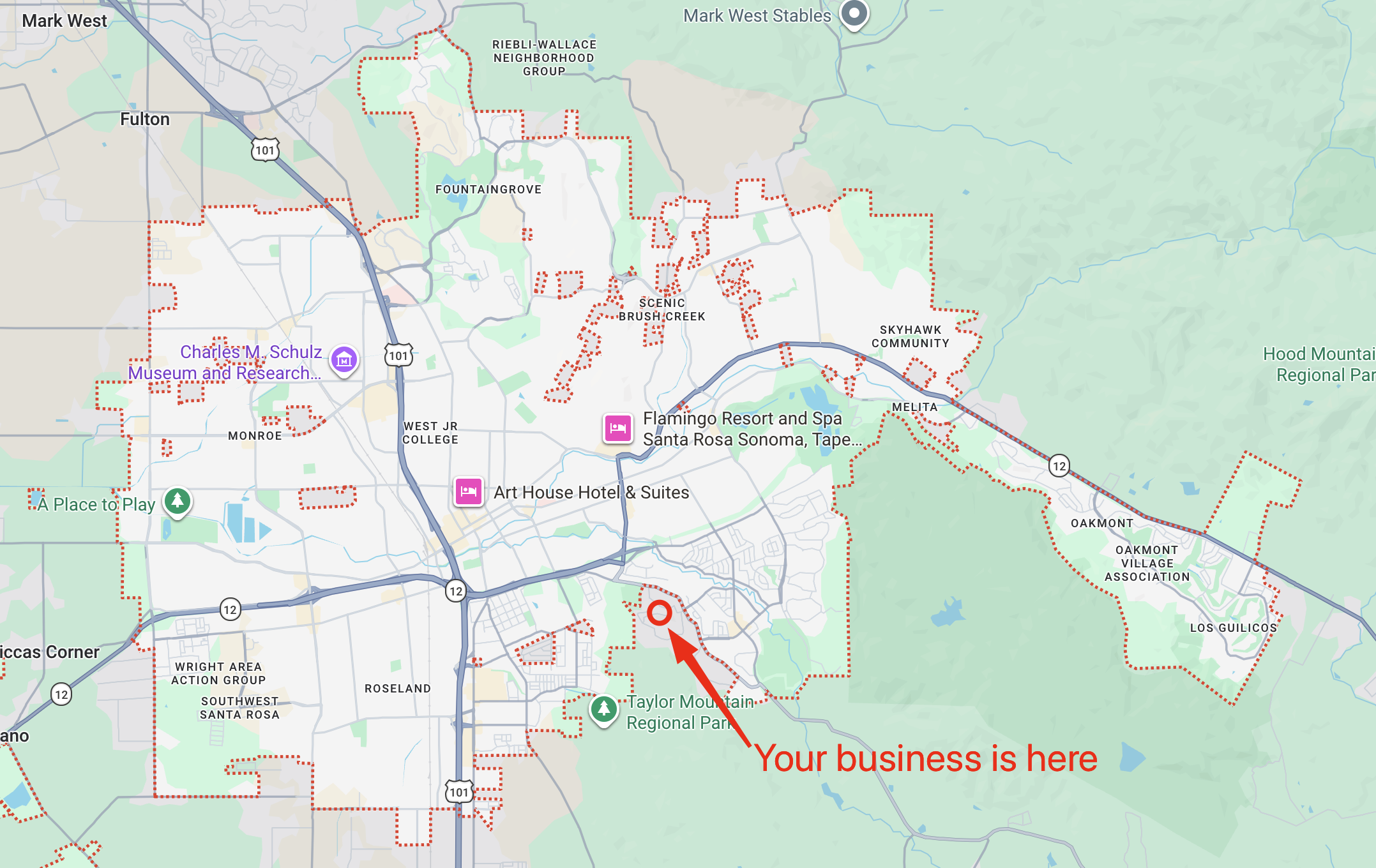
Look up any town or city in Google.com/maps and you’ll see the red dotted line that delineates Google’s concept of its border, as seen above.The dilemma here is that if your business is located even a little outside that border, Google may not consider it a relevant result for searchers located inside the perimeter.
1. Move to a location within the city borders or open a second location there.
This is the only option that will make this disadvantage completely disappear. Everything else is an attempt to work around Google’s bias, so while budget and circumstances may make this an impractical solution for many local business owners, you should carefully consider any possibility of doing this.
To open a second location, remember that it must meet Google’s eligibility guidelines to be a genuine asset instead of a new problem for you. No virtual offices or P.O. boxes. Your location must have a unique phone number and be staffed during listed business hours. If you’re considering a co-working space as a solution to opening a second office, be sure it offers street-level signage and has a unique phone number that your on-site staff directly answer during open business hours. Avoid sharing a co-working space with anyone who shares your Google Business Profile categories or you may find your new location is being filtered out at the automatic zoom level on Google Maps due to your proximity to another business with the same categories.
2. Specialize in something that’s uncommon in the nearby city.
Let’s imagine you have a contracting firm that builds swimming pools, and there are ten similar businesses inside the city, while your office is located outside its borders. Most of your competitors build conventional swimming pools, but you realize you can set your brand apart by offering construction and maintenance services for natural swimming pools. If such services are less common inside your neighboring city, Google will very frequently expand the radius of their local results to deliver a relevant answer to your potential customers.
Specialization isn’t limited to products and services. It can also include amenities, such as being one of the few nearby businesses that has a dog-friendly dining patio, or, being open outside normal business hours. Your business being open at the time of search is actually the 5th most influential local pack ranking factor, so if you are open when competitors are closed, this could increase your visibility at certain times of day.
Do a competitive audit of the common traits across your nearby competitors with the goal of ideating creative ways to distinguish your business from others. While this approach may not improve your Google Maps rankings for core offerings with a high level of competition (e.g. conventional swimming pools), it can work wonders for your rarer products, services, and amenities (e.g. natural swimming pools, dog-friendly dining patios, or late-night service).
3. Compete on other local search ranking factors.
While having a physical address inside the city has a massive impact on local pack/Maps rankings, it is not the only ranking factor:
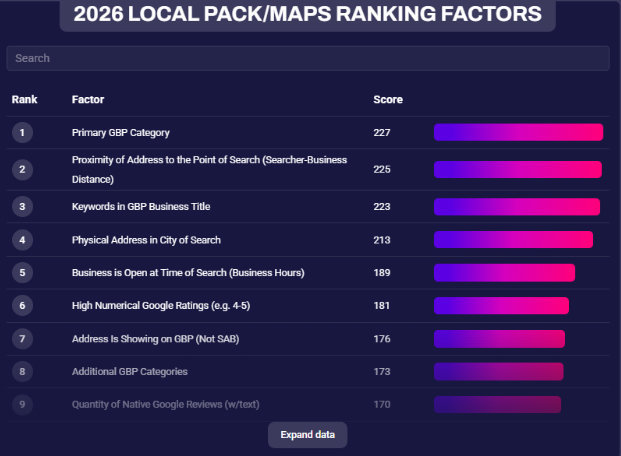
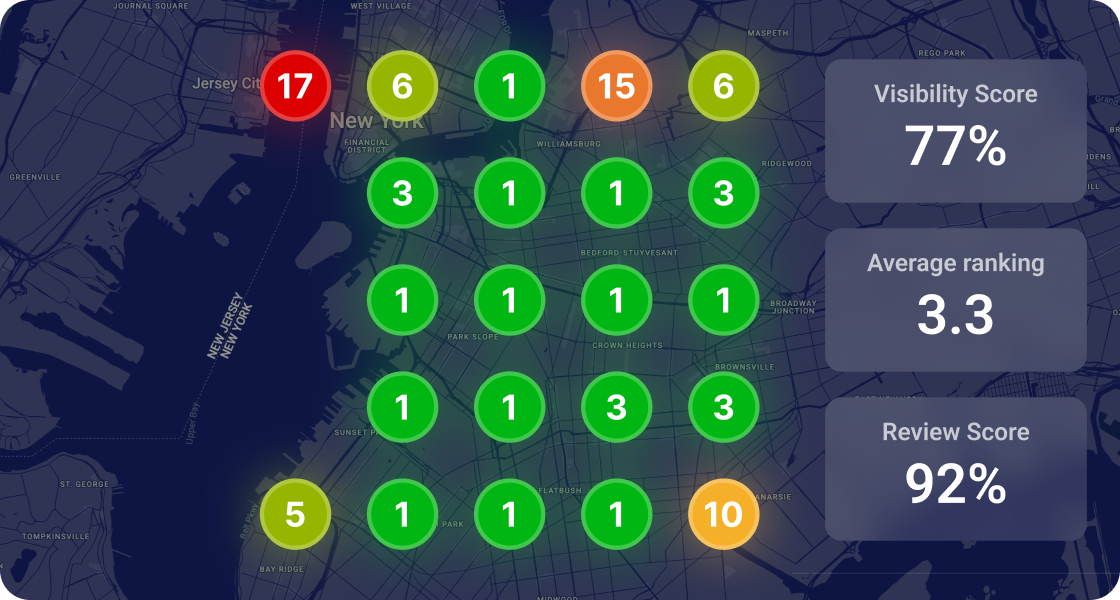
If you cannot compete on location, you may still be able to increase your local rankings by competing on other ranking factors. Use a free trial of Whitespark’s Local Ranking Grids to discover your top competitors within the city:
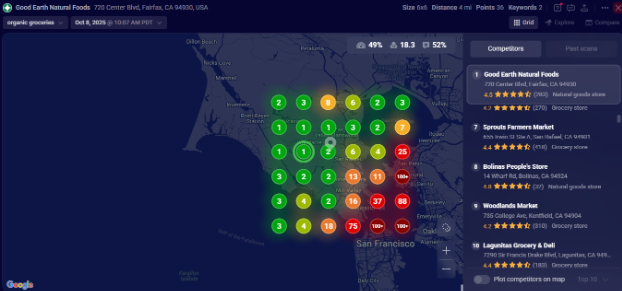
The Competitors view of this easy-to-use tool will give you useful information about each of your top competitors, including their average star ratings, review count, the number of photos on their Google Business Profiles, their Google categories, their hours of operation, whether they were open when the ranking scan was run, the claimed/unclaimed status of their listings, and other data.
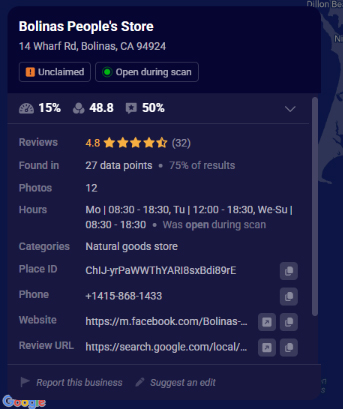
This investigation may quickly turn up opportunities for you to become the stronger competitor. For example, you might earn more reviews or a better average star rating. Follow up on this initial research by examining all of the Whitespark Local Search Ranking Factors in our annual survey and doing a full competitive audit of the top-ranked bands to discover any opportunity to surpass them across a variety of metrics.
This is a good time to remember that Google’s own Tips to Improve Your Local Rankings identify three categories of influence: relevance, distance, and prominence. These are sometimes referred to as the “three pillars of local search”, and while your address may be holding you back from competing on distance, it is frequently possible to overcome at least some of this disadvantage by building stronger relevance and prominence. Tactics to doing so include:
4. Pay for visibility.
Where all else fails, you can overcome much of the disadvantage of a problematic physical location by paying Google for ads that are shown to searchers inside city borders. Depending on your business model, different types of ads may be most appropriate, such as Google Local Services Ads, Google Local Ads, or Google Ads.
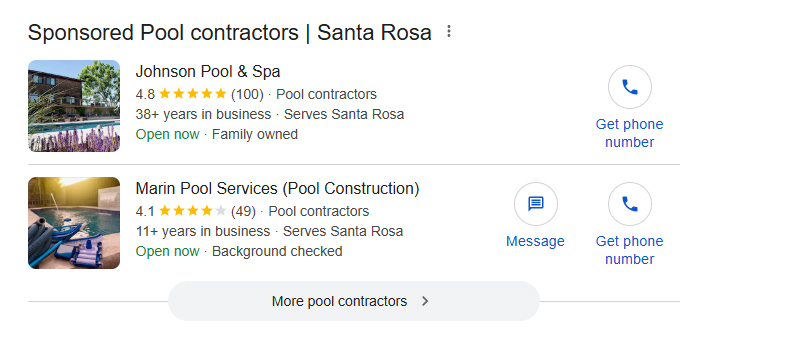
5. Investigate breathing room in Google’s AI tools.
While this final suggestion does not directly address the issue of traditional Google local pack/Maps rankings, it’s one to keep your eye on. A much-cited study by ZipTie, Inc. of 25,000 searches uncovered the startling information that ranking #1 in Google’s organic results only gives you a 25% chance of being cited in AI Overviews like this one:
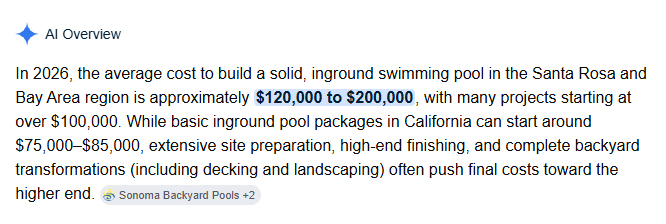
Your business should be investigating where and how you are showing up in AI Overviews, even if your address is making you less visible than you’d like to be in traditional local pack/Maps results. Read The Prevalence of AI Overviews in Local Search to better understand opportunities for appearing in these prominent summaries..
Meanwhile, the ability of a conversational AI tool like Google AI Mode to retain the context of your potential customers’ queries may already be having the effect of diluting the negative impacts of a less-than-perfect business address. Whereas in the past, a searcher was pretty much stuck with the local pack/Maps results Google would return for a typical local search query like “swimming pool contractor near me”, now, Google AI Mode permits users to continue their investigation for the best match via prompts like these:
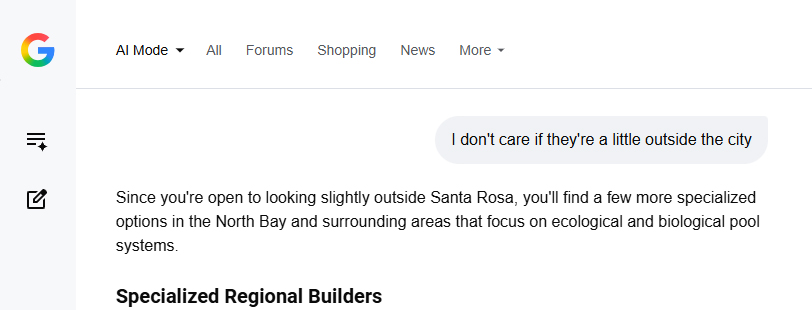
Read Whitespark’s Guide to Google AI Mode for Local Businesses to understand opportunities for visibility beyond traditional local pack/Maps results. Just as a top organic ranking doesn’t guarantee that your top competitors in a city will be the most cited references in Google AI Overviews, your chances of being shown in response to Google AI Mode prompts may be more numerous than in traditional local results because of the diversity of content this tool can cite.
Moreover, Google is now pitching hard for people to opt into Personal Intelligence, which enables an extreme degree of tracking (even reading users’ unopened emails!) to offer heavily-customized AI-generated recommendations:
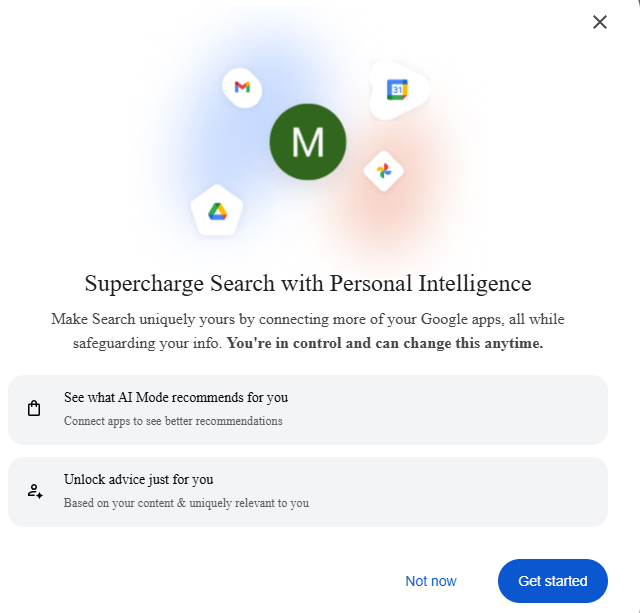
The creepiness factor of this level of human surveillance may prevent widespread consumer adoption. Time will tell, but should PI become a popular product, one of its apparent effects will be to put each Google user in their own swim lane, seeing results that are heavily influenced by their online activity and history.
Imagine a consumer whose friend emailed them five years ago to show them photos of the natural swimming pool you constructed for them. Now, the consumer wants a similar pool at their house, and Google will bring up your business as a relevant answer because of this past email exchange.
In such a dynamic, the disadvantage of your address outside city borders recedes further and further into the rear-view mirror. Instead of being hyper-focused on traditional local search ranking factors, your marketing strategy might become far more heavily reliant on earning customer referrals via loyalty programs and networking.
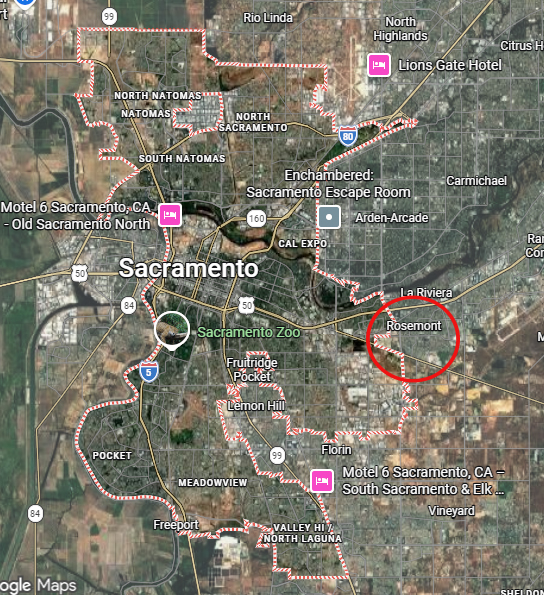
Your dental practice’s official address is in Sacramento, California, but it’s in a suburb locally known as Rosemont and you notice that the summary on your Google Business Profile is listing you as “dentist in Rosemont” instead of “dentist in Sacramento”. This is a fictitious scenario I’m describing, but Gail Gardner showed me a real one very like it in another part of the country, explaining that the business in question simply wasn’t getting the rankings or traffic it needed because of being associated with a small community instead of a major city.
Since Google launched Maps in 2005, disputed borders have been an ongoing issue. Google Maps data often simply doesn’t align with postal office data, and if it’s negatively impacting how you’re being listed and ranked, you have three next steps to consider.
1. Report the incorrect border to Google.
Read this thread in the Google Maps Help Forum to see how a user successfully documented and reported an incorrect Google Maps border that was then corrected by Google. This is the ideal solution, but it’s important to know that Google frequently ignores such reports and does not respond to them. I would be very tempted in this scenario to try to get my city’s newspaper (if my city still has a newspaper) involved to bring as much publicity as possible to the issue. I would post on my community’s subreddit, try to get my city council to take up the issue publicly, and get all of my local business peers to make multiple reports in the Google Maps Help Forum about the problem. If none of this resulted in Google taking action, I would move on to the next two steps.
2. See whether local SEO could overcome Google’s bias.
The most bizarre feature of the case Gail showed me was that a business in the same category located on the same street as the client was not summarized by Google as being outside the city border. This could indicate that doubling down on structured and unstructured citations and other online content describing the business as being within the big city might influence its summary and visibility.
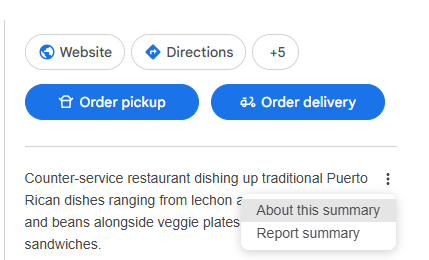
You can, of course, report an incorrect GBP summary to Google by clicking on the three dots next to it (see above), and you might succeed in getting them to change it to describe your business as being in the big city, but if they are internally convinced that you are outside the border, this may have no effect on improving your visibility.
3. Move or open a second location inside the border.
If all else fails and Google will not alter their border despite your abundant documentation and reportage, you can either move your primary location inside Google’s border, or get a new office location there with visible street signage, a unique phone number, and staffing during open business hours. This is, of course, an extreme solution to a very difficult problem, but it may be the only way to remove your ranking disadvantage when Google Maps is wrong.
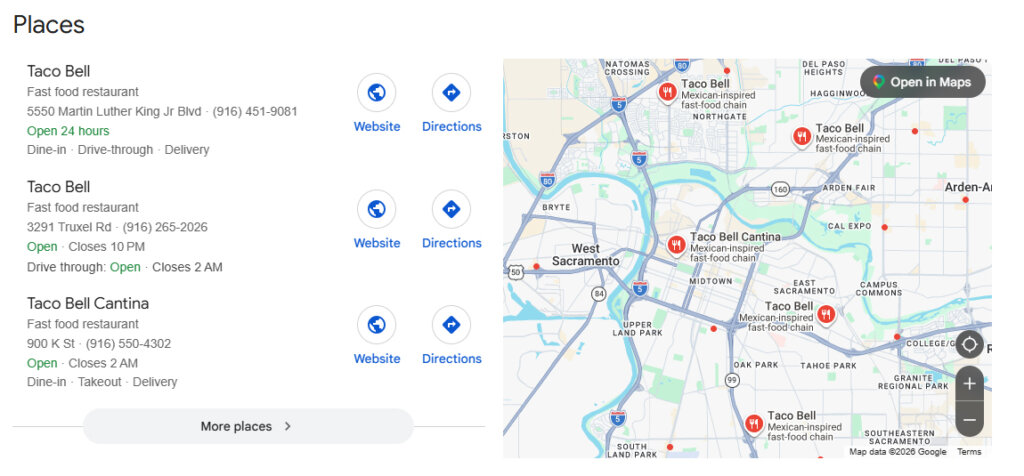
You’ve launched your small business and it’s beginning to dawn on you that you are being consistently outranked by multi-location enterprises who have earned more reviews than the total number of customers your company serves. Gail asks if there is any way to compete with this kind of big budget dominance.
The hard truth is that your small brand may always face a ranking disadvantage because of the prominence your bigger competitors have built up over time. Remember that we saw in challenge #1 that prominence, relevance, and distance are often referred to as Google’s three pillars of local search. It’s also true that reviews are strongly believed to impact rank, and you can’t set the goal of earning a higher volume of reviews than a competitor who serves more customers than you do.
The ray of hope is that review volume is just one ranking factor. In fact, when we look at all factors pertaining to local pack/Maps rankings in Whitespark’s survey, we see reputational factors listed in this order of importance:
Before you decide to move locations to a less-competitive community where you can be a big fish in a small pond, study the above list closely and you may discover opportunities to compete with big brands on something other than review volume. For example,
1. You could earn a higher average star rating.
Unfortunately, local monopolies are famous for making the mistake of resting on their laurels, letting customer service standards slide because they think of their business as unshakeable. This Walmart location may have a volume of 2,628 total reviews, but look at its poor rating. This location is slipping dangerously close to falling below 3 stars, at which point, the majority of consumers will no longer patronize it:
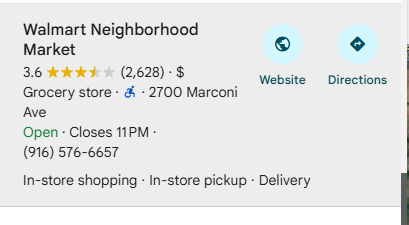
Small businesses that obsess over providing exceptional consumer experiences can absolutely earn a higher average rating than big brand competitors who are careless of customer satisfaction.
2. You could craft a plan for optimizing review recency.
Review recency isn’t just a local search ranking factor; it’s also the quality that local consumers care about most. GatherUp’s survey of 1,000 US consumers finds that the majority of local customers pay most attention to the most recent reviews, and this makes sense. Recent reviews give the most accurate picture of current customer service standards, products, services, and other amenities, as opposed to older content that reflects the business in the past.
Instead of trying to earn a large review volume all at once (which could actually lead to your reviews being suppressed by Google because you get too many too quickly), you can focus on earning a very small number of very fresh reviews on an ongoing basis from your limited customer base.
3. You could make the most of your relationships with customers to earn more influential reviews.
Brands that have huge volumes of customers also tend to treat their patrons like numbers. This is just a sad fact of big business. Small business owners, on the other hand, may know a large percentage of their customers by name, socialize outside office hours with some of them, and be directly involved in local life in the community where they live and work. The remote director of marketing for an enterprise with hundreds or thousands of locations is not sitting next to you at your child’s little league game. But if you are putting in the time to be a trusted business leader in your town or city, then you have the advantage of being able to have real conversations with your customers about how they can support you.
It’s perfectly fine to let your best customers know that highly detailed reviews of your business, products, services, and amenities could help you keep serving the community. Warmly invite your patrons to take photos all over your premises or projects and include them in their reviews. Offer to hold your patrons’ cell phones to shoot videos of them visiting and talking about what they love about your business so that they can include these shorts when they post their reviews. You may not have the volume of the big boxes and chains but you can absolutely have better reviews that exert more influence on both rankings and local consumer purchasing decisions.
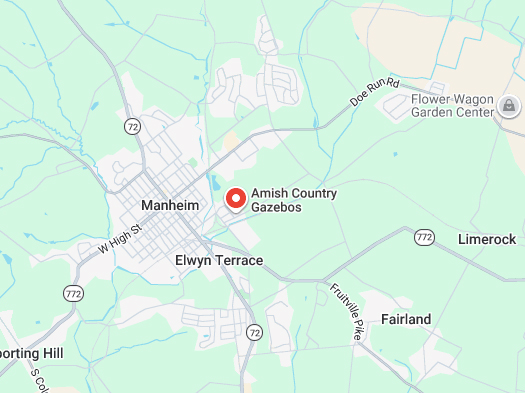
For this final challenge, I’m delighted to feature a scenario which Gail described to me in detail and which I am somewhat fictionalizing for the purpose of describing. A local gazebo construction business is located in a rural area between three large towns. Because of its remote location, it is not getting enough drive-by traffic or orders, and it has little ability to rank in the nearby population centers due to its physical address.
When an area is rural enough or a business offers rare products and services, it’s not uncommon for Google to go far outside of city borders to deliver relevant local results to searchers. However, this was not happening in this particular client’s case. A more creative solution was called for, and here is my summary of how this small company increased its profitability without having to expect Google to change its policies and practices:
Your takeaway here is that if you are in a location that doesn’t feature enough customers to enable you to meet your profit goals, Google Maps is not set up to solve your problem. Short of getting a staffed office location in a busier locale, your best strategy is to think outside the box about how to attract customers from further away. Gail asked me for my additional suggestions, and here they are for you:
Double down on loyalty and referral programs – Imagine if every customer you have served in the past several years either regularly came back to shop/contract with you again or had referred a new customer to you. Ideate what you can do to inspire your current customer base to help you grow sales and leads.
No one is quite sure whether it was actually Baron Samuel of Wych Cross who coined the phrase “location, location, location” regarding real estate, but it is certainly a saying with pointed applicability in the local search marketing world.
The tips you’ve encountered today may be just what you needed to help you make some lemonade out of a lemon physical address that’s been holding you back. However, there are instances in which your brand’s address is simply putting you at too great of a disadvantage. You know you need to move to a new location to level the playing field.
But what is to prevent you from making the same mistake and ending up in another luckless locale? The answer is research. This time, you can put in the elbow grease necessary to finding an optimal location for your business by investigating competitors in any town or city.
Whitespark’s Local Ranking Grids is exactly the tool you need for studying how competitors’ locations and ranking factors are assisting their wins. Use this software to understand how addresses are influencing any market, and to help you pick a new location that will give your business a truly valuable advantage. Get started for free!
Miriam Ellis is a local SEO columnist and consultant. She has been cited as one of the top five most prolific women writers in the SEO industry. Miriam is also an award-winning fine artist and her work can be seen at MiriamEllis.com.


Whitespark provides powerful software and expert services to help businesses and agencies drive more leads through local search.
Founded in 2005 in Edmonton, Alberta, Canada, we initially offered web design and SEO services to local businesses. While we still work closely with many clients locally, we have successfully grown over the past 20 years to support over 100,000 enterprises, agencies, and small businesses globally with our cutting-edge software and services.