CONTENTS
🤓 The 2026 Local Search Ranking Factors are here!! Check out the report!

🤓 The 2026 Local Search Ranking Factors are here!! Check out the report!


Want to boost your visibility in both Google’s organic results and the outputs of conversational AI like Google AI Mode and ChatGPT? Developing unstructured citations is one of your very best options.
What is an unstructured citation? It’s any mention of your local business on any online third-party publication other than a formal local business directory like Google Business Profile or Yelp.
You can earn unstructured citations from:
While structured citations revolve around getting listed in online local business directories, unstructured citations tend to hinge on your community and industry involvement. This guide will teach you how to earn these valuable and influential mentions to increase your brand’s prominence. We’ve got real-world examples, practical tips, and all the inspiration you need to develop unstructured citations like a pro!
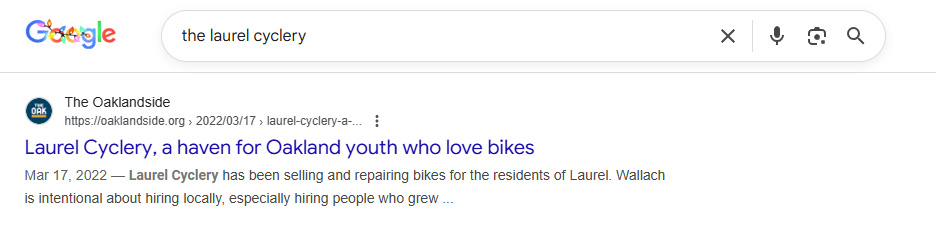
For decades, you could do a branded search in Google and quickly see which unstructured citations were ranking highest for the business. For example, when we look up “The Laurel Cyclery,” one of the top third-party mentions it has received is on an Oakland community news site:
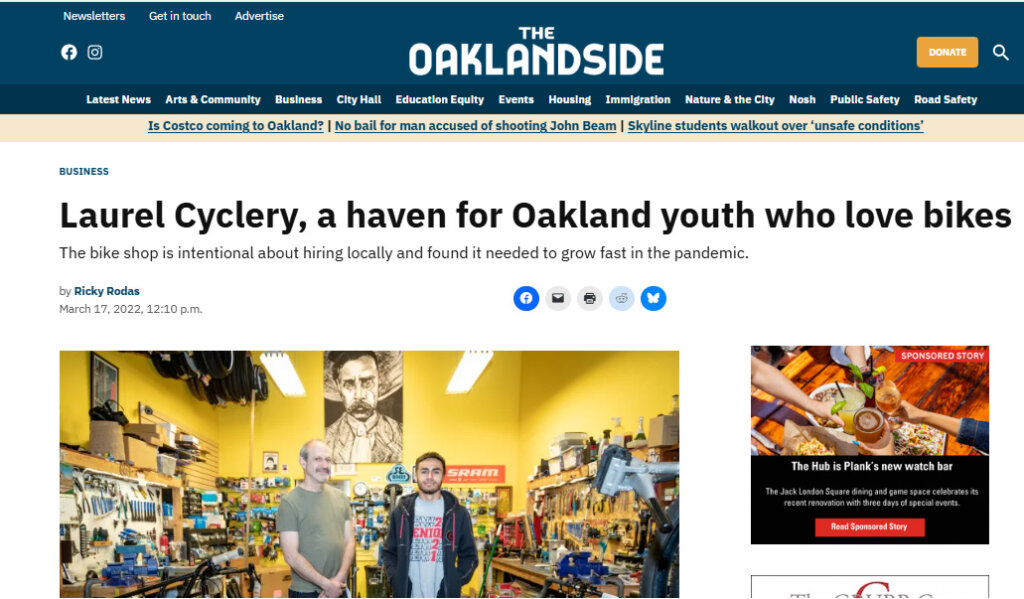
The bicycle shop in question earned this excellent unstructured citation by being featured in this local news story:
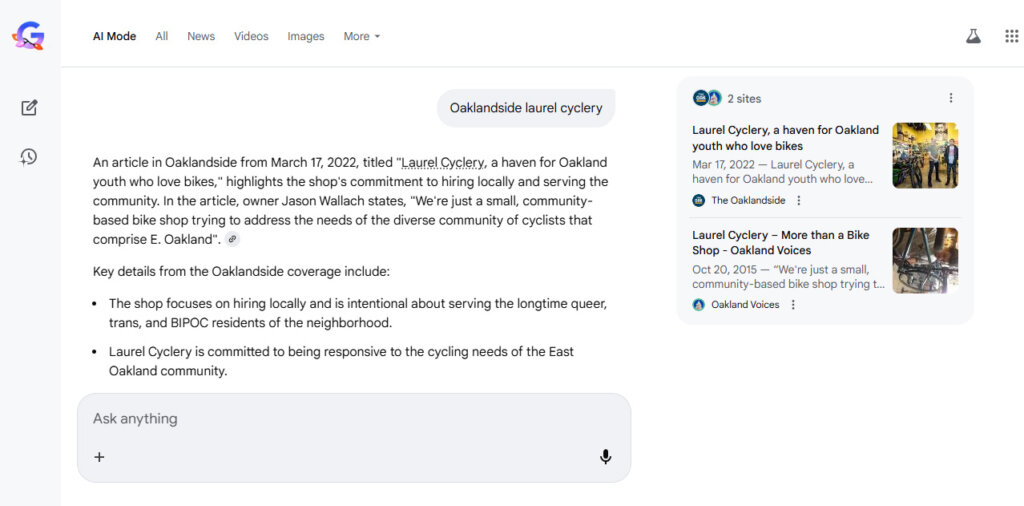
While this traditional role of unstructured citations continues to be important, they’ve recently become a hot topic because of their ability to influence brand visibility in generative AI results. As you can see from the following screenshot, Google AI Mode “knows” all about this news article:
And so does ChatGPT:
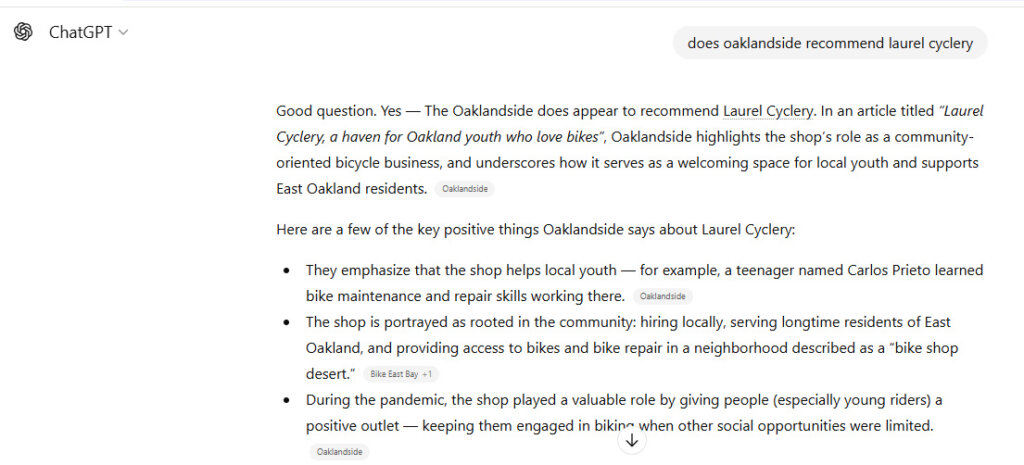
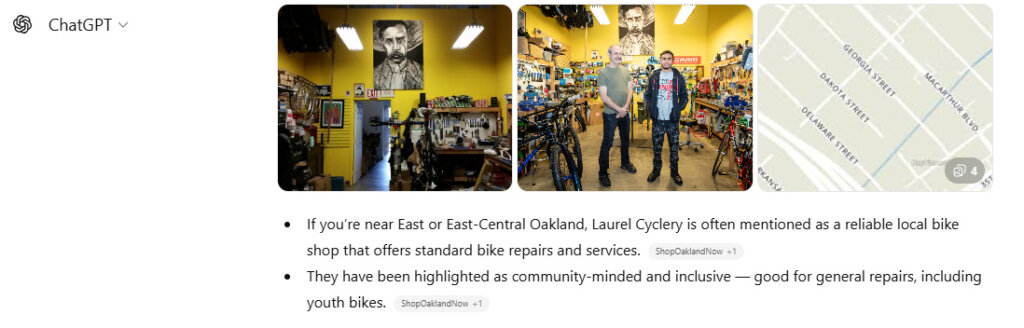
In fact, when we ask ChatGPT where we can get a kid’s bike repaired in Oakland, it’s scraping photos from this same article (along with other unstructured citations the business has earned) to answer our question:
As you can see from Whitespark’s 2026 Local Search Ranking Factors report, local SEO experts consider unstructured citations to be among the top AI visibility factors:
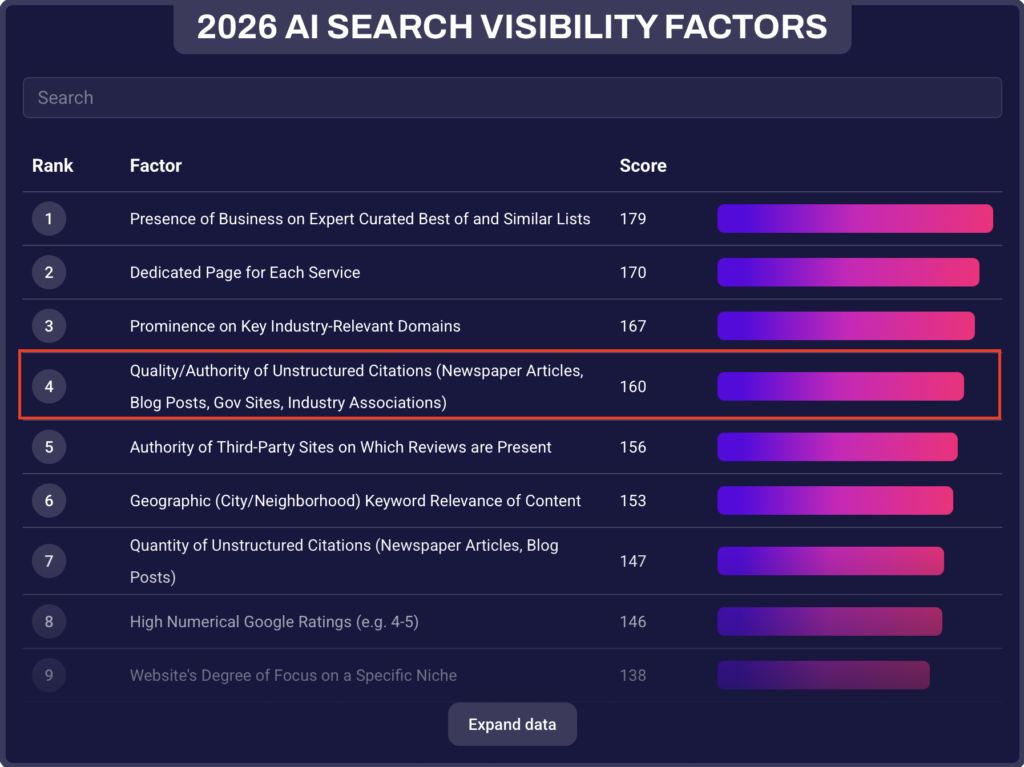
Your takeaway: Whether potential customers are searching for your brand or its goods and services, unstructured citations are now highlighting both positive and negative information about your business across organic results and conversational AI. This is content your company needs in order to be discovered by the public and chosen for transactions.
Yes! Google’s own tips to improve your local rankings break local pack ranking factors down into three groups of signals – relevance, distance, and prominence:
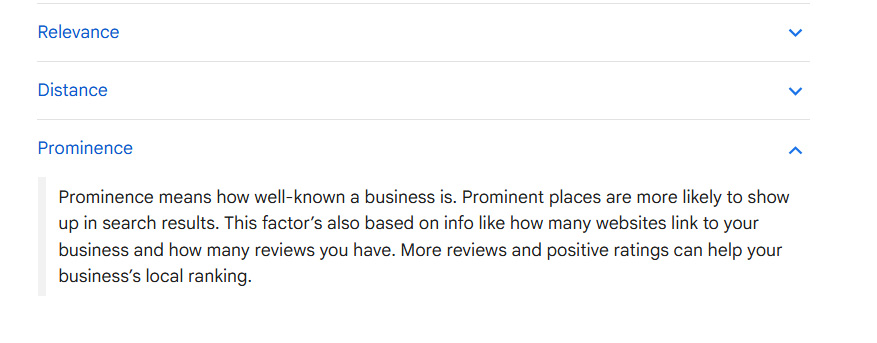
Unstructured citations are a perfect fit for proving to Google that your business is well-known because it’s being mentioned and linked to by multiple relevant websites. Meanwhile, if your unstructured citations contain a wide variety of information about features of your business, this could also help Google bring you up as an appropriate result for different search intents.
While unstructured citations do not need to contain links in order to influence the public, it’s best to try to earn a link whenever you get mentioned. By doing so, local SEO experts surveyed in Whitespark’s Local Search Ranking Factors report strongly believe that you can influence your Google local pack/Maps rankings. For more on this, read the full report.

In 2025, SparkToro CEO Rand Fishkin published a must-read article entitled Unpopular Opinion: Public Relations is the Future of Marketing. If the term “PR” makes you think of something old-school and fusty, think again. As Rand explains:,
This dynamic not only holds the keys to building a broad digital footprint of positive press for your local brand, but it can also be a vital tool for recovering to some degree from reputation challenges. Even very good local businesses can make mistakes that lead to negative coverage and loss of the public’s good opinion.
A real-world example of this is captured when we query Google AI Mode about the reputation of a California fast-food chain and vegetarian food manufacturer, Amy’s Kitchen:
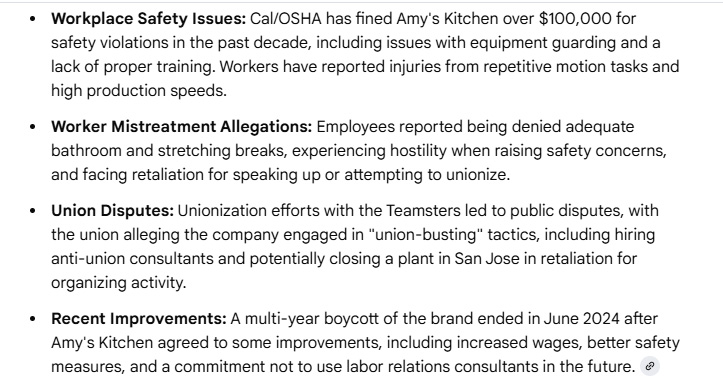
Workplace safety allegations, fines, and labor disputes led to a multi-year, headline-making consumer boycott of this brand, which had previously built an excellent reputation on the basis of its emphasis on organic, plant-based cuisine.
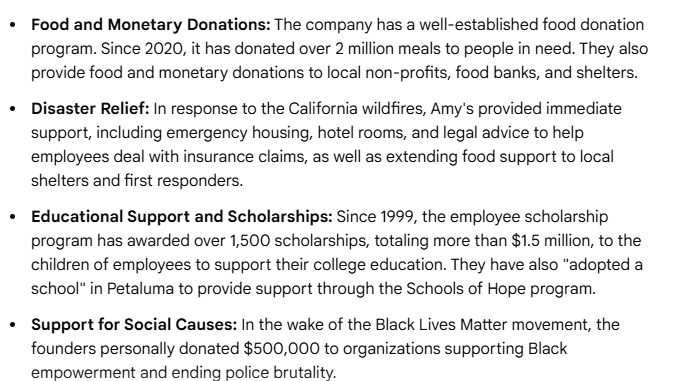
While PR can’t erase past reputational problems, it can certainly seek to balance them with positive information. Bearing in mind that all AI-generated information should be rigorously fact-checked for accuracy, here’s a Google AI Mode summary of positive press this brand has earned via community outreach and involvement:
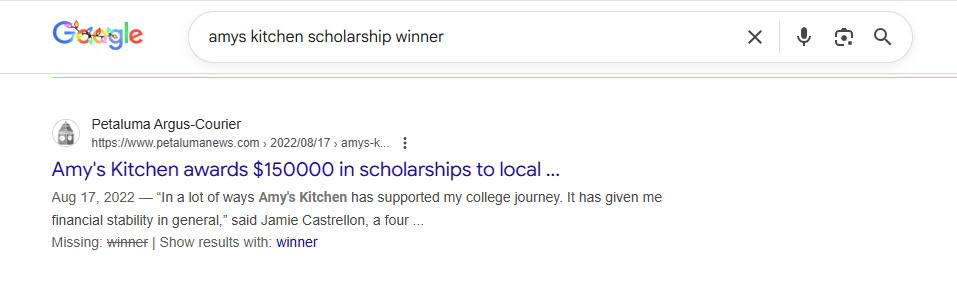
Consumers evaluating whether or not to patronize this business could definitely turn away if all they see is negative press. But, unstructured citations like this one about the brand benefitting the local community with scholarships can create a more balanced and/or positive opinion, impacting consumer decision-making and purchasing behavior:
Your takeaway: Modern consumers are swayed by multiple sources of online PR. Unstructured citations are one of your most powerful options for developing a broad digital footprint of positive press which can even help balance out negative stories. Actively pursuing a visible reputation for doing good in the local communities you serve is the key to this powerful form of marketing.
The history of link building has taken the SEO community into some pretty dark alleys over the years, causing Google to respond with manual actions and penalties for practices like link buying, link farming, etc. We raise this issue because the point of linked unstructured citation development is not to rake in a bunch of paid or unpaid mentions wherever you can for the sake of influencing rank.
Instead, we’d like to offer you an 80/20 mindset to bring to this ongoing work that you should communicate to all relevant stakeholders and team members to avoid wading into murky territory.
Unstructured citation development is…
For this 80/20 dynamic to be a win-win for everybody…
Are there any exceptions to these best practice guidelines? Yes. Sometimes, local businesses make national news or go viral on social media. It certainly won’t hurt your California-based company if you end up being mentioned in the New York Times and it could help you capture extra business from the tourist trade, but this isn’t really the bedrock of unstructured citation development.
Your takeaway: Unstructured citations rely on a lot of giving and a little “getting” in return, but where you get what you get needs to make practical sense. In short, it needs to make sense for the community and for customers, as well as for your business. You’ll be on safe and smart ground if you adopt this mindset, and now you’re ready to begin this creative and valuable work!
Spark your campaigns with these ideas and real-world examples. You can also download your own copy of this list here:
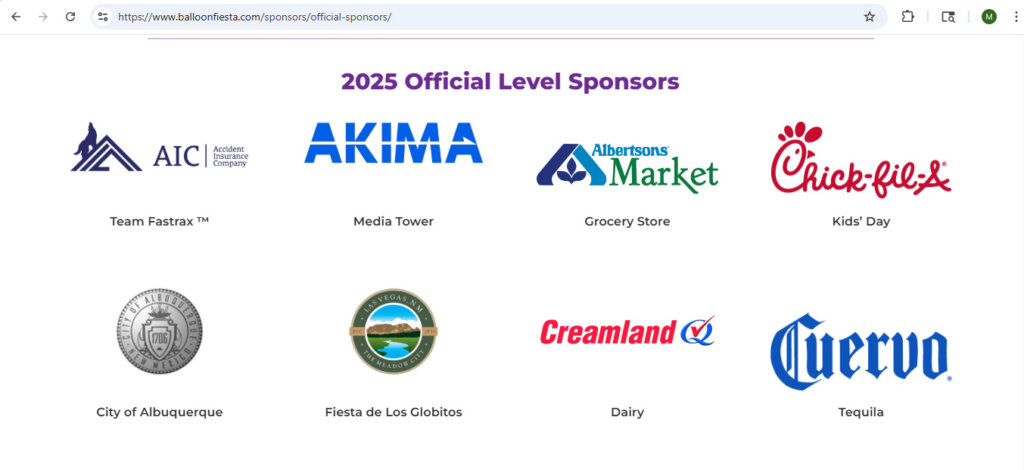
Sponsoring a local or industry event, sports team, community project, or organization is one of the most straightforward ways to earn an unstructured citation. Candidates who qualify must either have a ready-made “Sponsors” page like this one for the Albuquerque Balloon Fiesta, be willing to build one, or to mention you in some other crawlable/indexable/scrapable area of their online publication.
To find these opportunities:
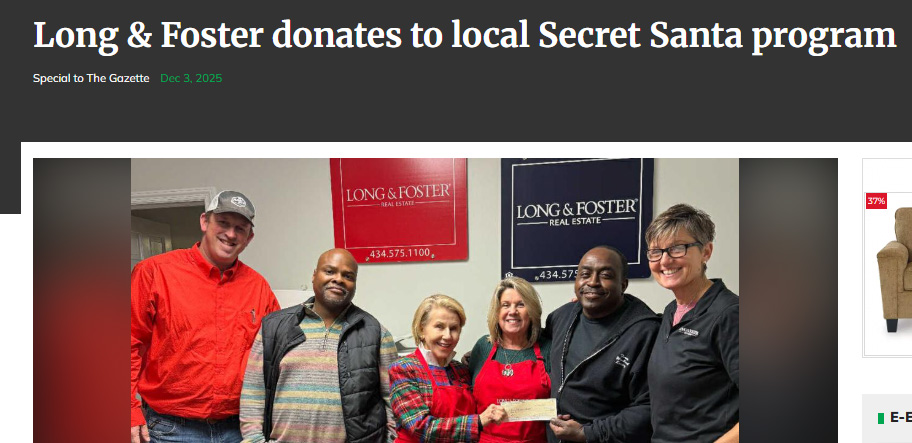
Donations can earn your business local news stories and mentions on recipient publications, like this coverage of a real estate firm donating to a Secret Santa program. Any worthy local or industry charity, organization, team, or event is a good candidate if they have the power to cite you, and don’t be shy about feeding your philanthropic news to local reporters.
To find these opportunities:
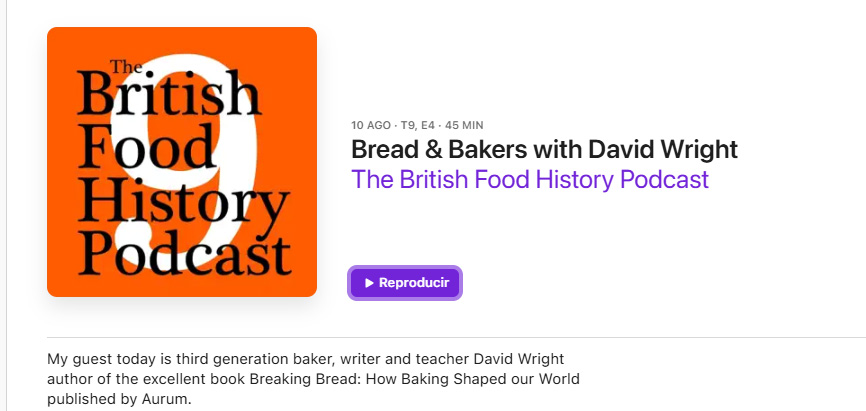
Be the guest of local and industry podcasts, videos, local radio, and blogs like this professional baker appearing on a food history podcast, or contribute expert content to relevant online publications. Qualifying candidates must be willing to cite you in bylines, show notes or articles.
To find these opportunities:
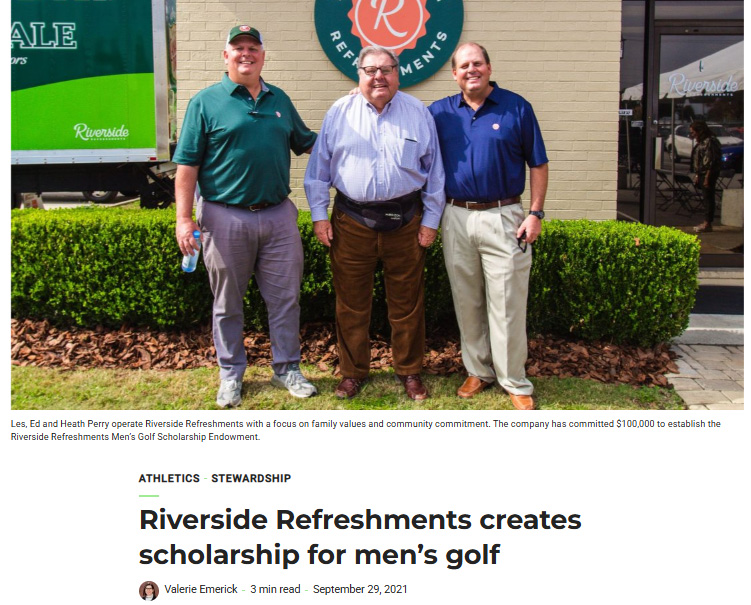
Earn press and unstructured citations by creating a local scholarship, like this beverage company’s endowment for a golf program at a neighboring university. Scholarships for educational institutions can result in nice links from .edu domains and create good news pieces for local reporters, but any kind of scholarship opportunity is worth investigating if the recipient is able to publish online mentions of it.
To find these opportunities:
If the 2024 shutdown of HARO has left you wondering how to connect with local reporters to become a cited source of business news, check out these free alternatives:
Larger local enterprises may want to invest in a paid account with the above platforms, where available.
Many communities no longer have a traditional local newspaper, but if yours does and you are an expert in your field, it could be well worth your time to investigate whether there is an opportunity for you to become a regular contributing columnist. Your column can build both your personal and brand authority. For example, the CEO of a marketing firm might publish a business column, while the owner of a home goods store might publish a lifestyle column.
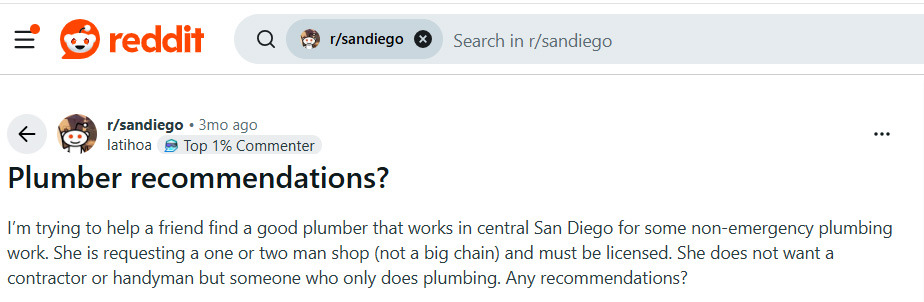
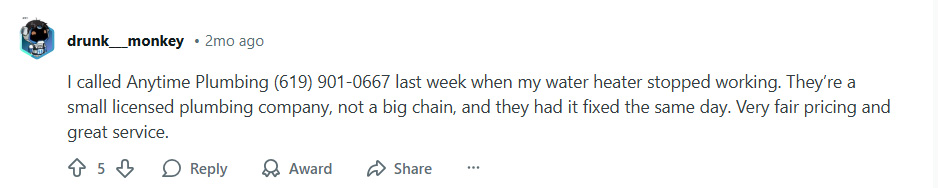
While just 1% of consumers begin their hunt for a local business via social media, many end up there asking for recommendations they feel they can trust. Threads like the above example from Reddit are quite common and frequently receive helpful responses like this one from neighbors:
Here’s proof that Google is scraping these brand mentions and using them to generate AI Mode content:
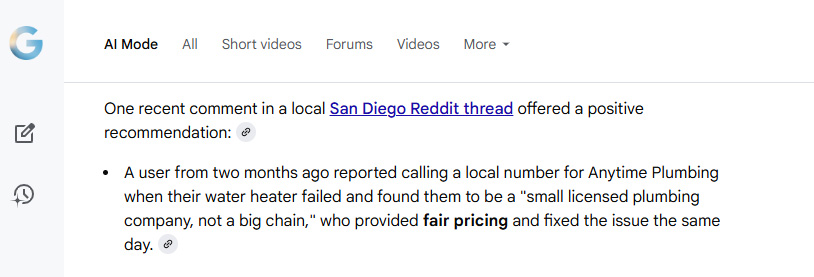
While positive social media mentions can be valuable structured citations for your business, there’s a caveat: communities like Reddit frequently forbid self-promotion. If you responded to the original thread in this example with a sneaky recommendation of your own company and the community sussed that out, you might get banned and create a lot of bad press for your business instead of positive mentions.
So, while the best way to influence social media citations is to offer such excellent consumer experiences that your patrons voluntarily recommend your brand when the opportunity arises, this doesn’t have to mean your hands are tied when it comes to developing a scrapable, citable presence. A smart approach is to consider whether to host an ask-me-anything (AMA) on a platform like Reddit, as this plumber did:
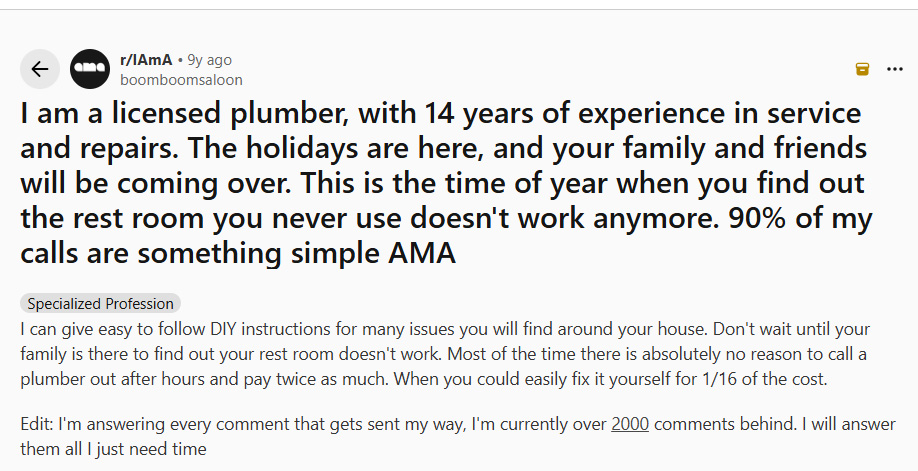
This particular plumber’s AMA was so successful that they were inundated with thousands of questions and eventually had to stop accepting new comments. To avoid that outcome, local businesses should limit their AMA sessions to a local audience. This will give your brand the chance to help others in the community, showcase your expertise, and publish indexable, scrapable content that can be cited in response to searches and prompts about your business.
The above example is an extreme one in which one of the most influential restaurant review channels on YouTube has teamed up for an episode with a celebrity to eat at his favorite Hawaiian restaurant. It’s social influence that’s raked in more than 5 million views. Kudos to you if you can arrange for this kind of visibility, but for many local businesses, this degree of fame probably isn’t necessary.
A somewhat toned-down example would be locating nearby or industry influencers like the above TikTok publisher and sending them merchandise or invitations to free services in exchange for being mentioned.
✍️ Note: It is vital that such engagements feature a notice of full disclosure that an incentive has been given for being cited. Undisclosed incentives in social media content may well fall afoul of your nation’s laws.
If you’d like to pursue the visibility that getting cited by an influencer can bring, search spaces like TikTok, YouTube, and Instagram for publishers who post about your town or industry and who have lots of followers. Word to the wise: be thorough in your research. Your brand probably does not want to associate itself with an influencer who ends up taking problematic stances on controversial topics. Spend time looking at their content to see if it’s a good match for your company’s philosophy before you reach out.
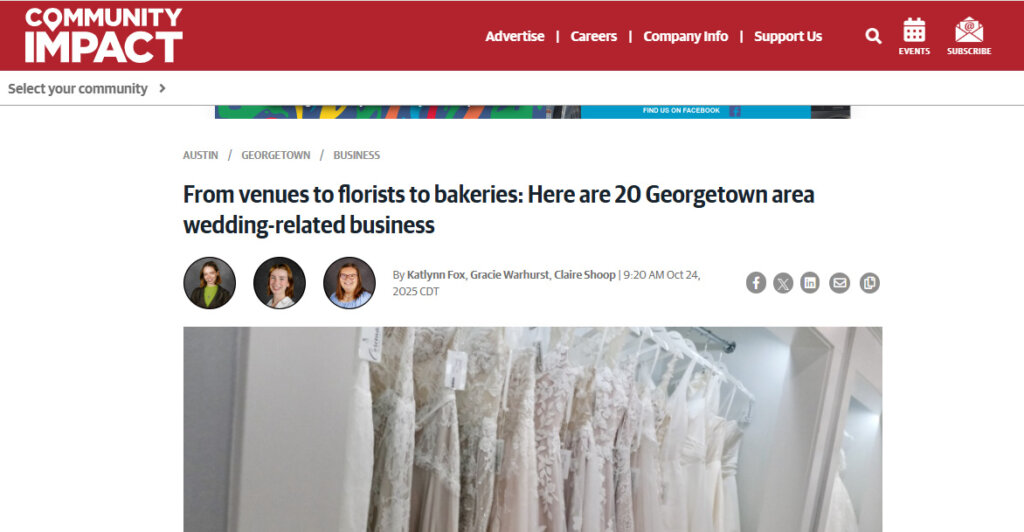
Think beyond your stand-alone business to see your brand as part of a network of related services, whenever possible. The wedding industry offers a classic example of this dynamic. Customers don’t just need a florist, or wedding clothes, or an event venue, or a church, or a DJ, or a caterer, or a wedding cake baker, or an event planner. They need all of these goods and services for their big day.
It’s a smart and natural move to team up with non-competitive but related local brands to cross-promote one another’s offerings. You can offer package deals, joint coupons, 2-for-1 offers, referral perks, and other mutually beneficial arrangements. In considering these opportunities in your community, look for business peers who have a well-maintained website and a good social media presence. These relationships can be transformed into very strong unstructured citations when you co-publicize your cross-promotions across all your channels.
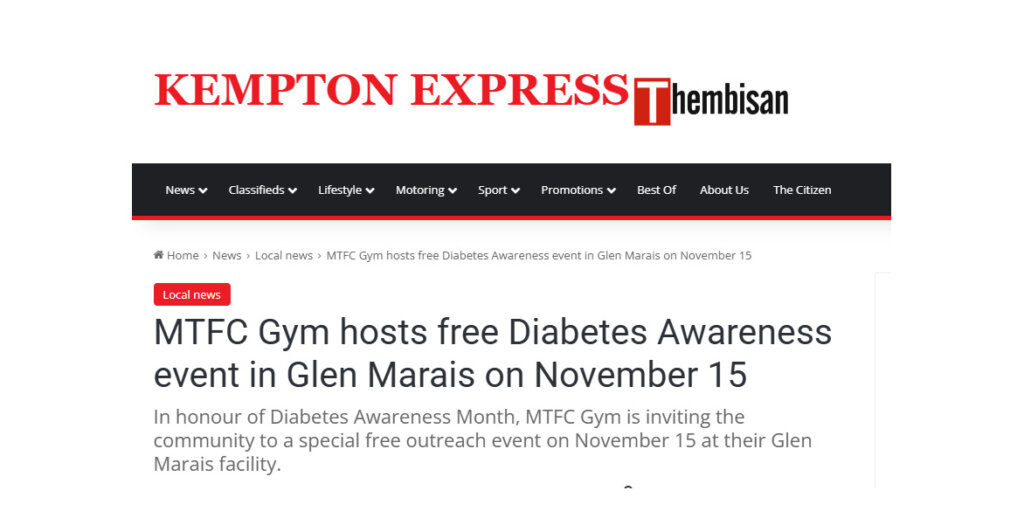
Create good press about your brand by hosting or participating in local or industry events. In the above example, a local gym is hosting an outreach event to build awareness about a particular health condition. Your community may feature ready-made events you can contribute expertise to, or you may have to launch them yourself.
You can research local and industry event calendars for ideas, but it’s also a great idea to hold an all-hands meeting at which you put out a call for staff to come up with event concepts. A bicycle shop could host a race. A clothing boutique could host a fashion show. A marketing firm could host a conference for its industry. The goal is to surface an idea that creates community/industry excitement and is capable of earning unstructured citations across a variety of publications.
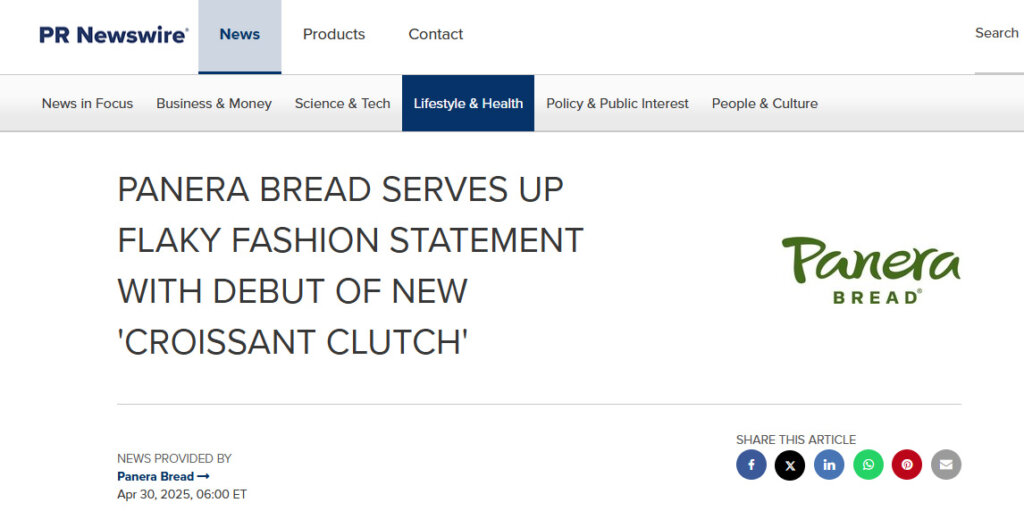
Press releases are another area of digital marketing that many might have considered old-fashioned prior to the AI shakeup. Now, with AI scraping publications like PR Newswire, the SEO industry is re-evaluating this form of unstructured citation:
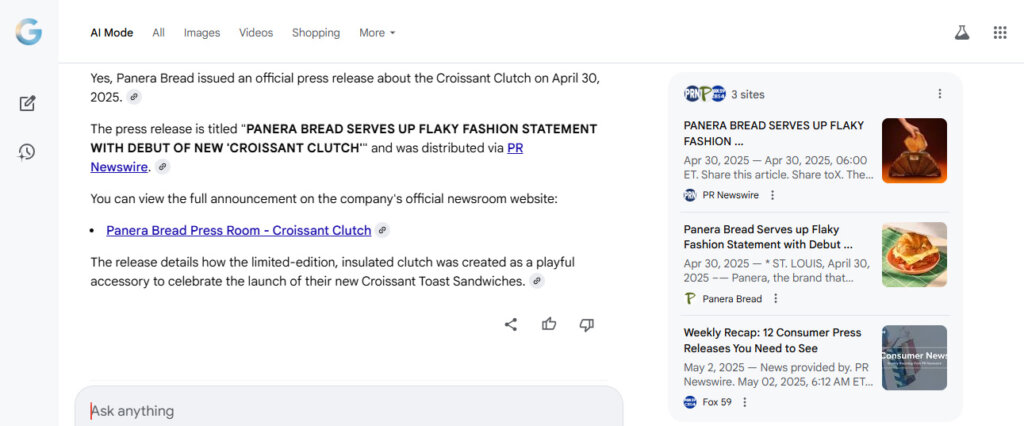
A key benefit of press releases is that you can create them yourself to grow your citation footprint, without having to outreach to reporters, influencers, institutions, or business peers. Popular press release sites include:
Unstructured citations offer almost unlimited opportunity for growing your prominence signals in the eyes of Google. This content is indexed in the SERPs, scraped by AI, and encountered by customers along their local search journeys. To maximize success, pay attention to these three final tips.
We’ve given you a useful list summarizing strong and proven tactics for unstructured citation development, but don’t be afraid to make your own experiments. Exciting publishers and the public takes creativity. Use your resources to the fullest. Perhaps you’ll host a contest, engage in a successful PR stunt, or identify an important story in your community that no one else is talking about. What works for your brand may be unique.
You can use a tool like AlertMouse to continuously track new brand mentions, but you should also audit structured citations anytime a core component of your business changes. For example, if you move, change a phone number, email address or hours of operation, undergo a merger or rebrand, or other major business event, it’s time for an audit. If older structured citations reference outdated information, outreach to the publisher to request an update to these details to avoid misleading or confusing the public.
While unstructured citations largely hinge on getting mentioned by third-parties, be consistent in promoting any good press you earn. Publish it on your website and across your social channels. Repurpose good quotes as Google Posts, video, and image content on your Google Business Profiles. Publicize praise and awards on offline assets as well, like store signage and company vehicles. This is multi-purpose content that can be employed to continuously demonstrate the value of your business and the trust and press it has earned.
What to read next? Unstructured citation development is just one aspect of a full local search marketing program. Too often, small business websites are overlooked in the digital marketing dynamic. Read: Whitespark’s Guide to the Perfect Small Local Business Website.
Miriam Ellis is a local SEO columnist and consultant. She has been cited as one of the top five most prolific women writers in the SEO industry. Miriam is also an award-winning fine artist and her work can be seen at MiriamEllis.com.

Whitespark provides powerful software and expert services to help businesses and agencies drive more leads through local search.
Founded in 2005 in Edmonton, Alberta, Canada, we initially offered web design and SEO services to local businesses. While we still work closely with many clients locally, we have successfully grown over the past 20 years to support over 100,000 enterprises, agencies, and small businesses globally with our cutting-edge software and services.