
🤓 The 2026 Local Search Ranking Factors are here!! Check out the report!

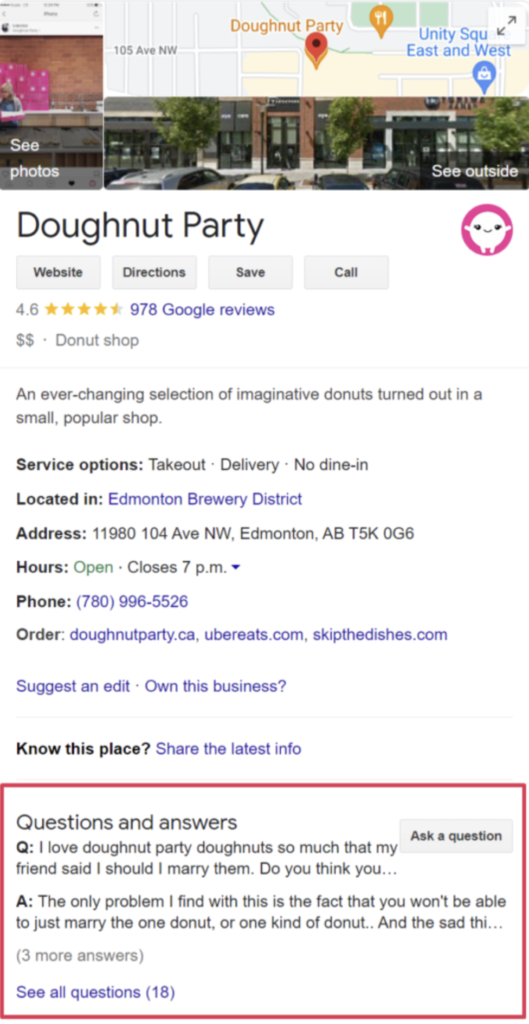
It was nice while it lasted! In 2017, Google rolled out Google Business Profile Questions and Answers, enabling local business owners to publish and respond to their own FAQs as well as queries from the public:
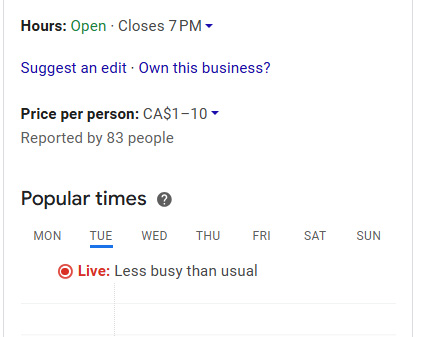
Now, that same listing on desktop features no Q&A section:
Big changes like this require a strategic response from local businesses, so today we’ll cover what’s happening with Google Q&A and what to do about it. I’ve got a checklist for you for feeding the emergent Google Maps Ask A Question feature.
As yet, I see no replacement for Q&A on GBPs in traditional local search results on desktop and mobile, but in the Google Maps app, many profiles now have this Ask A Question feature, instead of the old Q&A section:
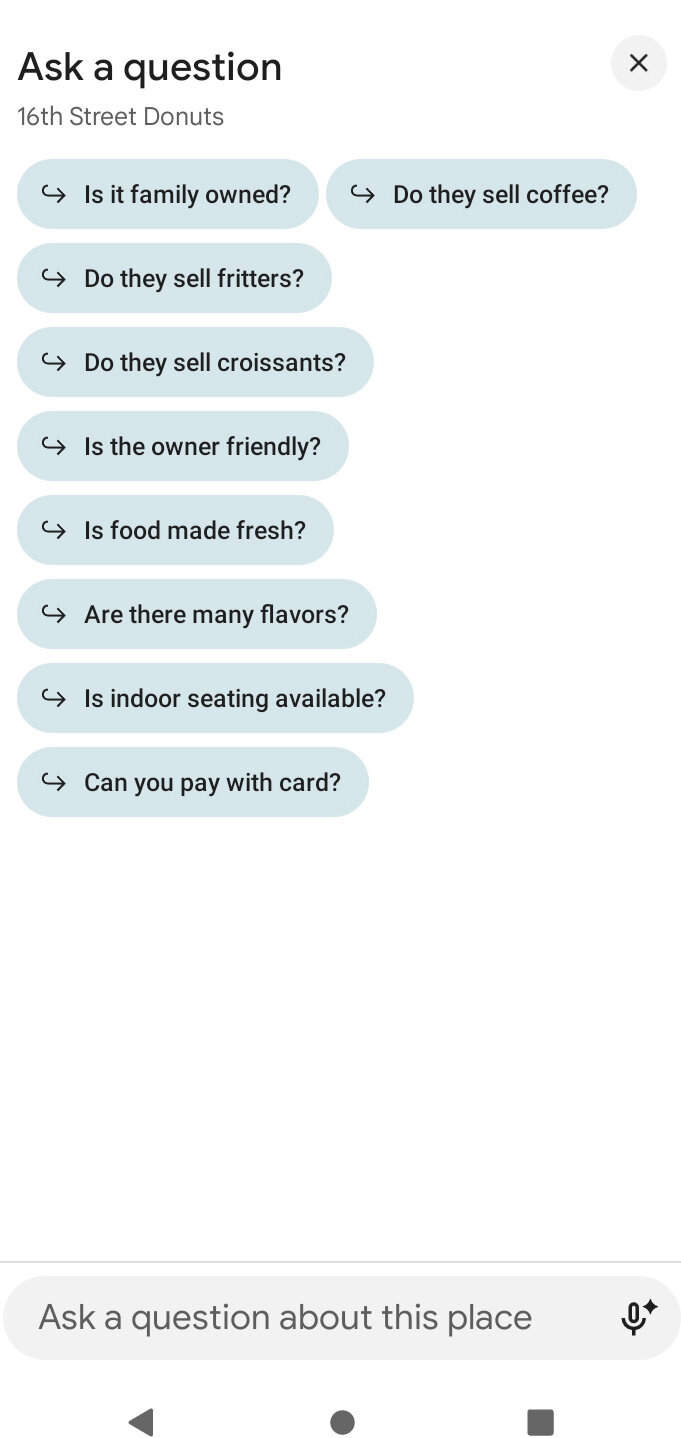
The feature is pre-populated with questions Google thinks searchers might want to ask, like “is it family-owned” and “is indoor seating available,” but users can also ask a custom question. When we ask “do they have jelly doughnuts?” we get an AI-generated response like this:
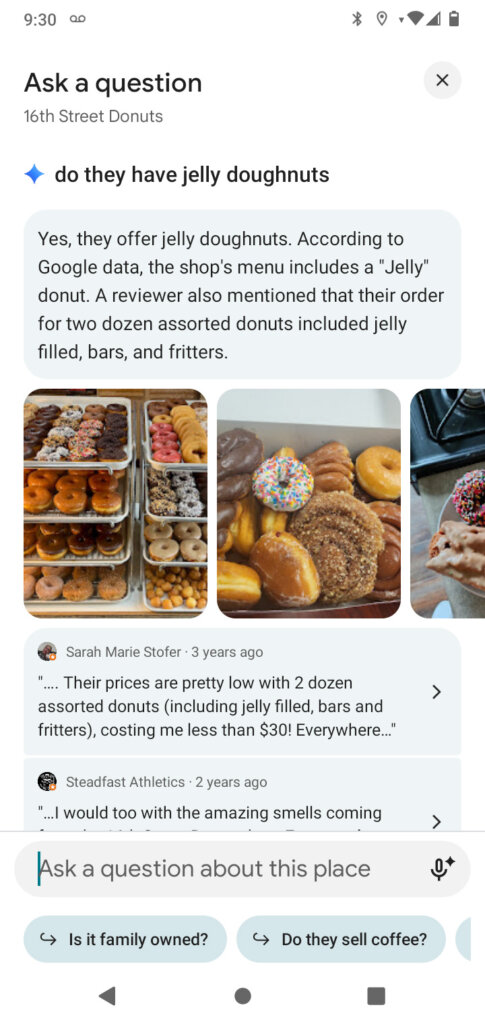
With Q&A being replaced by AAQ (hey, I’m coining that!) your best strategy is to feed the sources Google’s AI is scraping for information. Often, the AI generated answer will give you clues as to where the information stems from, as in the above example of Maps responding to my question about jelly doughnuts by citing reviews and the doughnut shop’s menu. Sure enough, when I check, there are “jelly doughnuts” on the menu that’s been uploaded to GBP:
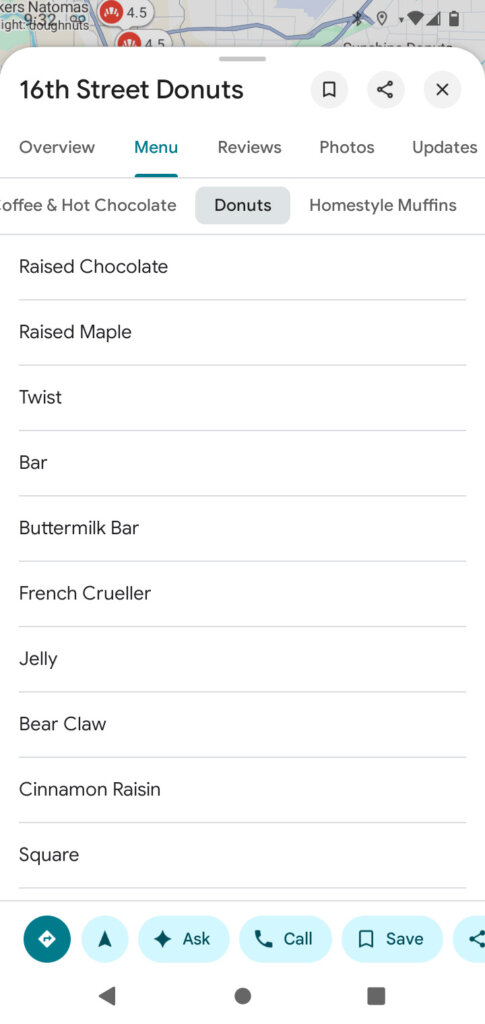
With this example in mind, here is your checklist for feeding AAQ as much data as possible so that it doesn’t respond with “I don’t have enough information about this place,” causing your potential customers to move on to a more informative competitor listing.
☐ Audit basic Google Business Profile info – Be sure your business name, address, phone number, website URL, and hours of operation (including special hours) are up-to-date
☐ Images and video – Photograph and film every possible aspect of your business, including interior and exterior premises, popular inventory, shelfies, amenities like patio dining and gender neutral restrooms, branded company vehicles and uniforms, etc.
☐ GBP reviews – Customize review requests to ask for consumer feedback on specific goods, services, and features of your business to receive more reviews with detailed language; encourage reviewers to include photos and videos in their reviews
☐ Third-party reviews – Be sure you are earning reviews from major third-party review platforms and consider embedding them on your website for maximum scrapability; Facebook has been spotted as an AAQ source, though Yelp may not be
☐ Menus – Upload and maintain menus for accuracy if available in your category
☐ Attributes – Go to your NMX and add maximum information about your attributes, products, services, and any other field Google offers you
☐ Categories – Be sure your business is properly and fully categorized
☐ Social media links – Connect your social media profiles to your Google Business Profile via the NMX dashboard “location” tab, and regularly share details and information about your business on social media.
☐ Website content – Identify customer FAQs and answer them prominently on your website, both on a formal FAQ page and throughout your site’s content
Google announced its “Ask Maps About This Place” feature in February of 2024. In fall of 2025, Google announced that it was deprecating its Q&A API and many business owners began realizing that their Q&A section was no longer appearing on their Google Business Profiles. At present, I can see the Ask A Question feature on multiple US-based businesses, but cannot see it in Canada.
When Mike Blumenthal investigated the new feature in January 2025, he found that your primary GBP category appears to dictate whether or not Ask A Question is live on your listing, and that the following categories appeared to be excluded:
As of my follow-up in January of 2026, the feature continues to be absent from these categories. If you’re not sure about your category, simply go to the Google Maps app and look up your business to see if the feature appears on your profile.
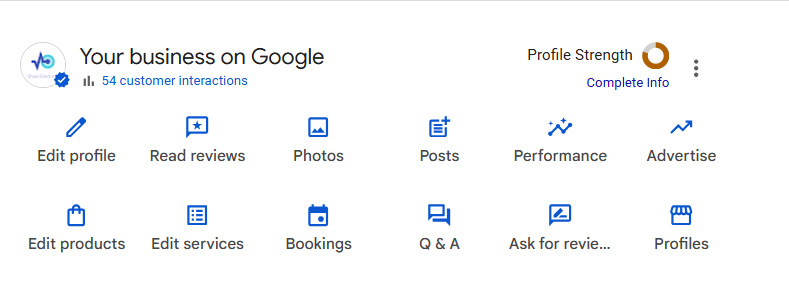
As the above screenshot shows, the New Merchant Experience dashboard still contains an icon and link for Q&A. However, you can no longer use this button to add new questions and answers, and your legacy questions and answers are no longer present on your Google Business Profiles.
At 4:22 in the above episode of The Whitespark Local Update Podcast, Darren Shaw speculates:
“As far as I can tell from this recent communication, there is a nuance that is maybe happening now which is they’re going to keep the Q&A section in the backend, and potentially…Google might prompt you, like, ‘there is a question people keep asking that we don’t know the answer to’ and then it will ask you to answer that question. And now, AI will have that information for answers for future customers.”
Please let us know on social media if you receive a prompt of this kind from Google, as we’re interested in confirming how this will roll out.
Not exactly. At present, Google does not appear to have any genuine replacement for the absent Q&A for traditional desktop and mobile local search results. The fact that AAQ currently only appears to exist within the Google Maps app means that its usefulness is limited to users of this product. Should Google roll this out to its broader local search environments then, yes, AAQ can officially be considered a Q&A replacement.
Google Business Profiles and Google Maps are best thought of as a giant lab experiment. Features are constantly tested, rolled out, and deprecated, which is why your local business should never tie too much of its marketing to any one element.
As to why Google has made this change, both of these answers are likely contributing factors:
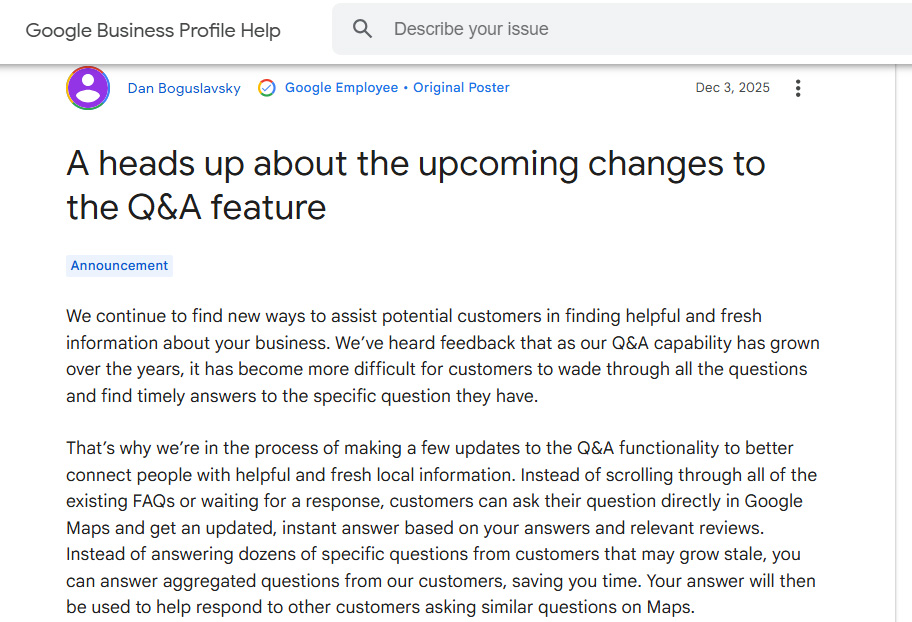
The most official explanation we have from Google is the one I’ve linked to earlier, stemming from Google staff member, Dan Boguslavsky:
“I think Google always loves more data, and clearly Q&A had become unwieldy. It didn’t work well on the front end interface in search, and so it moved over to just Maps, but people need answers. Certainly AI, with the quick queries, is a better way to get it…I think they were missing data and they’re relying on the business to provide it, and they will do that as long as the data they get from the business is helpful, and as soon as it isn’t, they’ll stop supporting that feature.”
Further, Mike offers the timely warning that no one knows exactly how this will all roll out with Google’s AI and the sources it scrapes.
Q&A was by no means a perfect product. When neglected, it created negative consumer impressions, signaling that the business didn’t care about its customers. It also carried a serious reputational risk in that unhelpful and incorrect answers from the public could mislead potential customers that might lead to disappointment, negative reviews, and lost conversions.
Now we are in a new dynamic, at least within the Google Maps app, and here are some pros and cons to be aware of:
| AAQ Pros | AAQ Cons |
| – Maps listings are too bulky to provide an ideal user experience; AAQ enables local consumers to quickly access lots of information about a business from a single field instead of having to scroll through a listing – Where the business is doing a good job of marketing via all the fields identified in our checklist, AAQ can now scrape and provide answers to nuanced and even compound questions; this capability did not exist before on Maps listings – Businesses that have not invested enough in publishing a strong website may benefit from AAQ’s ability to surface answers from multiple sources; consumers may convert if they find answers via AAQ that were absent from the website | – Q&A provided the opportunity for business owners to act as the authority about all questions pertaining to their business; AAQ downgrades this authority by making any scrapable source a representative of the business – Generative AI is notoriously prone to publishing false information; potential customers may be misled and lost due to this phenomenon without the business ever knowing about it due to the difficulty of tracking AI-based consumer experiences – Inadequate regulation creates a large looming question about who is responsible when AI leads to consumer harms; in general, AI represents a loss of business control over consumer experiences in an atmosphere of unclear liability |
As indicated by the checklist, your best response to the emergence of AAQ is to feed Google’s AI as much data as possible to hopefully maximize helpful answers that create conversions while minimizing misinformation.
Brands that are healthily obsessed with reputation know that controlling consumer experiences is key to positive outcomes. One of the most difficult things about the emergence of generative AI features is that they can disconnect customers from experts at local businesses, replacing them with information of uncertain quality.
While you are strategizing to meet the new opportunities and pitfalls of the AI era, my advice is to double down on those online spaces over which you still have full control. Your website remains a vital business asset and needs more care and feeding than ever before. To keep learning about this timely topic, read 6 Must-have Elements for a High-Converting Local Business Website.
Miriam Ellis is a local SEO columnist and consultant. She has been cited as one of the top five most prolific women writers in the SEO industry. Miriam is also an award-winning fine artist and her work can be seen at MiriamEllis.com.


Whitespark provides powerful software and expert services to help businesses and agencies drive more leads through local search.
Founded in 2005 in Edmonton, Alberta, Canada, we initially offered web design and SEO services to local businesses. While we still work closely with many clients locally, we have successfully grown over the past 20 years to support over 100,000 enterprises, agencies, and small businesses globally with our cutting-edge software and services.